SSBS2024-10-01T06:08:25.114Zhttps://chrisoft.org/blog/atom.xmlSpecluncam UrsaeChris Xiong's blog postshttps://chrisoft.org/cx.pnghttps://chrisoft.org/cx.png"Landfill in the Clouds" devlog2024-09-30T00:00:00.000Z2024-10-01T06:08:16.183Zhttps://chrisoft.org/blog/post/2024-09-30.htmlChris Xionghttps://chrisoft.org/This post inevitably contains spoiler for the level “Landfill
in the Clouds”. Proceed with caution.
Hints
General hints for the first few sectors:
Maintain a high speed if possible. You will reach the end before
even noticing it.
Remember how versatile the paper ball is.
There’s always another way.
You have infinite attempts. Don’t be afraid of restarting.
For the final section:
Heed the warnings. HEED THE WARNINGS!
If you ignore the last hint, you get what you deserve.
Like in many real life situations, not everything around you is
useful.
Sometimes taking a dangerous step is mandatory.
New gameplay mechanics in
this level
Random level generation
Arguably the biggest contribution of this level. Despite using a very
crude approach, the result is still pretty satisfying – both to look at
and to navigate through.
A more methodical approach is definitely possible (e.g. randomly
generated labyrinth), but I’ll leave that for someone else to
implement.
Dumpster fire
A weird Americanism (but one that makes sense if you think about it)
that somehow made into this level in its literal form.
Purely cosmetic. Won’t even burn the paper if you somehow manage to
fall into the dumpster.
The switch
Literally the most cliché mechanism in countless platformers. Now
it’s also been introduced to Ballance. Triggers an annoying buzzer alarm
when pressed.
“Energized Core”
This thing is here only because I don’t want to waste the explosion
script that I wrote back in 2019. Animated in the exact way as an
explosive found in Minecraft.
Mostly for decoration only. This idea may or may not be reused in the
future. If so, it will be given a more useful role.
“Skill trolling”
This is the revenge of an unskilled player against the “competitive
player camarilla” (don’t take this too seriously).
Vanishing balloon
Don’t know why but I’ve wanted to make something like this for quite
a while now.
Animation sequence
A redo of the closing sequence in my previous custom level. This time
improved and fully revamped.
Random facts on landfills
To be honest I don’t know why I added these. Maybe just to annoy the
player LOL.
More background story
The idea of a randomly generated level has been in the text file
referred to in the information page for quite a while. But it was deemed
a pretty difficult one to execute – it’s not easy to generate levels
that’s not completely trivial but still fun to play at the same time. To
make things worse, implementing anything that’s mathematically intense
in pure Virtools behavior script is a nightmare.
I’ve always been planning to make a level with a theme of decay too,
not because the state of the game – that’s just a coincidence (by the
way, I don’t even think this game is in a full downward spiral,
especially not on the technical front where the game is being completely
dissected and rebuilt), but instead because I’ve been fascinated by
scenes showing decay of a formerly prospering place for quite some time.
The event that kick started this project is me realizing that these two
ideas could be combined. A state of chaos may be interpreted as a state
of decay – something I told myself when I was trying to fit these two
unrelated ideas together. At this point, I wasn’t even sure how well
would this weird combination work: maybe randomly generated levels won’t
be playable at all. So my initial plan is to play with this idea to make
sure that it really works. But in my usual fashion, I was way ahead of
myself and soon finding myself designing the level.
The first thing I decided on is the theme: if I’m going to randomly
place things in the level, it will probably look pretty chaotic, and
let’s be honest, crappy. All trash finally goes to the landfill (well,
not literally but you get the point). That couldn’t be a more fitting
theme. I gave the final section a twist so that the level doesn’t feel
the same all the way through, and the twist plays into one idea listed
in my collection perfectly: pressing the switch emptying the final
landfill, revealing a hidden path that leads to the end of the level. I
threw in a few other ideas in my collection for good measure. These are
the ideas that I used for this level from the file:
physical switch
random level generation
something from Minecraft (you know which one appeared in the
level)
“skill trolling”
puzzle with unused elements / elements deliberately causing
confusion
When I was modeling the floor for the puzzle that appeared in the
final section, I realized the original design I had in mind is
completely unsolvable. So I had to improvise a little bit. This
unintentionally upped the complexity of the puzzle by a notch. Anyway,
despite my best efforts, to me this puzzle still seems “forced” and a
little bit out of place. This is barely surprising because my brain is
dysfunctional enough that the vast majority of puzzle games on the
market is out of reach for me… let alone the idea of designing a good
puzzle of my own. This entire level still feels like a bunch of discrete
ideas loosely put together anyway.
In addition to all that there is at least one alternative solution to
puzzle, which I didn’t bother blocking. That solution would require
pushing a box over unguarded path, so if you pulled it off, you fully
deserve it.
The modeling process is completely done in Blender on my workstation
computer which runs Linux. Thanks to the Blender plugin made by
yyc12345, this process was relatively free from pain and suffering
besides some minor annoyances. I provided my feedback to the developer
regarding how to fix these annoyances. Everything can now be done within
Blender without requiring any external tools (If you’re not making a
scripted level, you don’t even need to postprocess the exported file in
Virtools – the exported NMO file itself will simply work in the game as
long as you have all the required elements.) – this has been a massive
improvement compared to when I first started experimenting making
renders of the game in 2018. That was a time when even importing a level
into Blender would inflict major emotional damage. I still have to
relearn all the key bindings in Blender every time I use it though. But
I genuinely hope the Blender workflow can be more popular in the future,
and I would strongly encourage anyone who’s new to level making and
looking into getting started to at least try out the Blender workflow,
as it has become extremely streamlined nowadays.
Tuning the difficulty of the randomly generated parts was an
extremely tedious and painful process. I must have spent more than 20
hours just tweaking the numbers used by the level generator. Due to the
random nature of the level, I had to go through the level multiple times
every time I changed something just to make sure that I wasn’t only
getting the easiest generation. When I made the first beta release, the
consensus was that the level was still way too annoying to play through.
Therefore I took the axe to the generator, lowering the overall
difficulty significantly and hopefully made it much less irritating.
The level was simply called “Landfill” during its design phase. As
the name of my last level caused some confusion, I decided against
naming the level in an obscure fashion this time. For that reason it was
almost released as “Landfill”. However I couldn’t resist the temptation
to scorn the concept of “cloud computing”, so I stuck “in the clouds” to
the end and called it a day.
Other noteworthy
technical information
Sound compression
Virtools uses the WINMM’s ACM (Audio Compression Manager)
infrastructure to decode sound data. Therefore it supports any format
that are registered with the ACM. Windows provides out-of-the-box
support for a compressed format called ADPCM (adaptive differential
pulse code modulation). Files compressed by this codec is usually around
a quarter of their original uncompressed size – not great but still a
very significant reduction in size. It was the use of this codec that
made it possible to ship this level with high quality sound effects
while keeping the file size down.
The down side of this is that some so-called “light weight”
installations of Windows have this ACM component stripped out. For this
reason if you do not have msadp32.acm in your
System32 folder (or SysWOW64 folder for 64-bit
systems), these sound effects cannot be loaded.
Running Ballance in Virtools
Dev
It is now possible to run Ballance within Virtools Dev. This is
incredibly useful for debugging scripted levels.
This was made possible thanks to DoyaGu’s work, which completely
suppressed my prior work “CK2Shim” done in 2020-2021. My previous work
allowed behavior building blocks defined in libraries built for older
versions of Virtools to be inserted using a newer version of Virtools
Dev, but none of these building blocks can be executed correctly because
the lack of translation of virtual function calls. This new work is
based on a complete set of reverse engineered source code of these
building block libraries, and they are nearly fully functional when
built against a newer version of the Virtools SDK. Right now there are
still some imperfections in this process, but still the value it
provides cannot be understated.
The procedure for doing this hasn’t yet been made public at this
time. I’ll update this post once the full instructions are made
public.
Useless stuff
Content of the random messages in this level are based on information
from the following articles:
It’s easy to get stuck here. If you need a lifeguard who moves you
back to your last checkpoint when you haven’t moved in 10 seconds, press
F now. You may dismiss these messages by pressing Enter.
]]>A waste of money -- Why did I buy a custom mechanical keyboard?2024-08-20T00:00:00.000Z2024-09-05T15:07:26.832Zhttps://chrisoft.org/blog/post/2024-08-20.htmlChris Xionghttps://chrisoft.org/To answer the question in the title – I don’t know. If you know me,
I’m not a big gamer, let alone a hardcore one. I don’t play any game
that requires extremely responsive input, or many simultaneous key
presses. And I’m very satisfied with the keyboards that I already own
(see the background section for some of them). So I have no use for a
high-end custom keyboard besides the customization part… which I guess
is what I was shooting for?
Disclaimer
I don’t do keyboard reviews on a regular basis. I certainly can
type faster than many of your average YouTube keyboard
reviewer, but I’m nowhere close as knowledgeable on this topic.
Also typing feel is nothing but subjective anyway.
Some background
As I mentioned already, I’m not a big gamer. My main use case for
computer keyboards is the original purpose they are designed for, that
is, text entry.
I was semi-professionally trained on speed touch typing back when I
was 8. It was the bizarre time when programming contests for youngsters
in China had a speed typing component [1]. I spent hours
and hours practically every single day on the computer just to type out
the same passages again and again. At the time I was able to reach a bit
over 500 CPM,
or roughly 100 WPM.
I wasn’t able to improve further because I made too many dramatic finger
movements – minimizing finger movements seemed pretty difficult for me,
and I insisted on bottoming out every single key stroke. This remains
true to this day. I gave up on the training completely as soon as the
typing component is later removed, and of course my typing skills have
been in a steady decline ever since. Right now, I’m able to type at a
miserable ~85 WPM [2], and that’s only possible when the stars are
aligned. But that’s more than enough for me, because it’s still way
faster than the speed my brain is capable of conjuring up the things to
type.
I’ve used a lot of different keyboards over the years, most of them
rubber dome [3]. The
keyboard I was trained on was the horrendous OEM keyboard shipped with
Lenovo business computers (back when they were still named “LEGEND”).
They were mushy [4] and tend to become disgustingly filthy after
extensive use, which they absolutely were because that was the computer
room of the elementary school I attended.
Another rubber dome keyboard I used that was impressively bad was
again, unfortunately shipped with a Lenovo machine, this time my
family’s second home computer. The typing feel on that keyboard can be
pretty accurately described as “poking at semi-moist mud” – once a key
wasn’t pressed for a while, it would “solidify” and would require
excessive force to trigger, otherwise it’s just, again, mushy. It also
features the awful flat keycaps before modern chiclet keys completely
took over the OEM keyboard scene. Separation between keys was extremely
poor because the keys were simply too short.
Commendable rubber dome keyboards that I’ve used do exist, and they
would have to be those found on ThinkPad laptops. In fact, these are the
only keyboards on which I can achieve my ideal WPM nowadays. These
provides the crispest tactile response I have ever felt on laptop rubber
dome keyboards. I don’t have a clear preference between the classical
7-row keyboard and the newer chiclet 6-row keyboard with 1.8mm of key
travel in terms of typing feel. However I do think the 7-row has better
inscription markings as well as a layout that makes more sense, and that
those travel-reduced 6-row keyboards made after 2020 are a disgrace. And
of course, these keyboards feature my favorite implementation of the
pointing stick – TrackPoint my beloved.
The first mechanical keyboard that I spent a significant amount of
time with was the Cherry G80-3800 (a.k.a. MX-Board 2.0) with Cherry MX
black switches. It was cheap – because that was all I can afford when I
was in college. For the longest time I was typing on mushy rubber dome
keyboards, so I decided to go with their stiffest switches, and they
definitely didn’t disappoint. Build quality was nothing special
considering it was so cheap. Contrary to many opinions found online, I
actually didn’t mind the flat keyboard profile and the height-reduced
keycaps, because they a) didn’t affect key travel, and b) had proper
separation between keys.
I got my first IBM Model M keyboard in March 2018. It was a later
model with part number 1370477, manufactured 1995-07-20. I picked this
up for practically nothing (less than the equivalent of US$20 spent),
and rescued it from its miserable condition it arrived in. I was looking
for a Model M specifically because I was mildly annoyed by people in the
lab making the clicky-clacky sounds with their “gaming” keyboards that
used blue Cherry MX switches, with the expectation of completely
subduing them with the majestic sound of buckling spring on a solid
sheet of steel. To my surprise the noise made by it, despite being
psychoacoustically louder, wasn’t as obnoxious as the noise emitted from
blue Cherry MX switches, perhaps due to its lower pitch. It almost
sounded like music to my ears. So that plan completely failed
[5]. Yet I instantly fell in love with the tactile
feedback of the buckling spring mechanism. Built like a tank, I
suspected the keyboard is capable of turning into a murder weapon if
prompted [6]. I daily drove this keyboard until we
were forcefully parted ways because some dumbass mistook it as e-waste
and sent it to the recycling center. I have since acquired a second
Model M with P/N 1391401 and mfg date 1989-01-25. It has some
imperfections (which I may address at a later date) but I swear we’re
never parting ways this time.
Both
cubicles belonged to me. The Cherry MX board 2.0 and my first IBM Model
M are visible in this photo. Taken 2018-06-29.
KFA Freebird 75
– my very first misadventure with custom keyboards
Why?
I was aware of the existence of the custom keyboard business long
before I had any kind of interaction with it. In fact the “gaming
keyboards” used by my lab mate mentioned earlier was a custom one. Later
it became known to me that hardcore gamers were raving about reviving
switch technologies that were long dead in keyboards such as magnetic
sensing (hall effect switches) and optoelectronic switches. Features
that are once for the elite like NKRO can be found even in peasant-level
keyboards nowadays.
I actually came into contact with the custom keyboard business when I
was looking into modding my second Model M, specifically I was looking
for remapping a few modifier keys and maybe cut an additional opening
[7] in the case so that it can house a small desk
clock made by me – in my eyes there’s way too much empty space on the
back of the Model M to be wasted. I read through a few articles on
creating custom QMK-compatible controller boards for the Model M, and
decided that it was entirely within my skill set to make one of my own.
So I started looking through the source code repo of QMK. But my chaotic
evil brain soon decided to wander off and I found myself browsing the
list of keyboards that are already supported by QMK.
While doing so, I was absolutely stunned by the aesthetics people
could achieve when they build their custom keyboards. After digging
myself deeper and deeper in the rabbit hole for a few hours, I
impulsively decided to make a purchase.
What?
But here comes the problem – I have no prior experience with custom
keyboard DIY whatsoever. I don’t even know what do you need to build a
newfangled mechanical keyboard [8]. Nor do I
understand many of the terms used by this community: TKL
[9], mount, POM… After doing a fair bit of research, I
decided to purchase the following components:
$199 Freebird75 full kit by KeebsForAll (lilac/hotswap
ANSI/Aluminum switch plate)
$ 31.2 KBDFans Green & White Blank Cherry Profile Keycaps
$ 85.5 kfaPBT Forest Watcher Keycaps by KFA X Captain Sterling
$ 36 Cherry MX2A Black Linear Switches
I remember going through the component listing of the kit multiple
times to make sure that was all I needed (I still failed despite the
effort made), and making the conscious decision of not using any
additional lubrication on the switches – it would make the build
excruciatingly long and the benefit seems diminishingly small to me. I
chose black Cherry MX switches because of my familiarity with its
characteristics. The reason I got two sets of keycaps is that there was
no indication in the description of the Forest Watcher set that it would
contain a set of alphanumeric keys without hiragana markings.
[10] I personally don’t speak Japanese, or have plans to
learn Japanese, nor do I find having markings for a language that I
don’t know on my keyboard “cool”. So I decided to supplement it with a
blank set that has a similar color scheme. [11]
Now I want to talk about the vendor I bought from – KeebsForAll (or
KFA for short). I, as I always do, did my due diligence on
this company. Turns out they actually have a pretty bad reputation among
people in this community, especially from people purchasing a pre-order
item from them. Among the criticism of this company I saw, long shipping
times and unresponsive customer service seem to be the two most common
ones. “Well,” I said to myself, “I’m not doing a pre-order anyway. And
hopefully I won’t need customer support.” I was wrong.
Fortunately for me, the items shipped pretty fast: they sent a
tracking number after 2 days and I was getting tracking updates the day
after that. The package arrived roughly a week after my order was
placed.
As I was unboxing the kit, I was greeted with the dreaded words “made
in China” [12] and a few markings in Chinese. Knowing
personally a few mechanical keyboard enthusiasts from China, this didn’t
surprise me at all: they’ve told me that there’s a huge market for
custom mechanical keyboards in China, and it’s already the country
pumping out the most plastic crap anyway. What did surprise me though,
is that there’s no instructions whatsoever in the package, and better
still, that I realized something was missing after unboxing everything –
there’s no stabilizers in the kit! [13][14] So I
looked around for a stabilizer set that’s good for a beginner build, and
I placed an order for the following:
$10.99 DUROCK Stabilizer V3 Smokey Black 80% Kit
I patiently waited for the package to arrive. Meanwhile I searched
online for build instructions. KFA’s official website only provided two
heavily edited videos, one of which being a 10-minute review, the other
one being an edited down Twitch vod. Neither of these shows how to
install the stabilizers. After some more digging, specifically searching
for how stabilizers should be installed, I finally found a few videos
clearly showing how the type of stabilizers I bought are supposed to be
installed. I found this community has a severe lacking of written guides
(despite spending hours on the wiki page of r/MechanicalKeyboards) – a
lot of stuff is only available as videos, which is something I really,
really despise.
The
dread
Quality of the kit
There’s not much to nitpick on the quality of the kit – it better be
perfect cause it’s so frigging expensive.
According to the specs on KFA’s website, a fully built keyboard in
this shell weighs up to 5.5 lbs (2.5 kg). However, the numbers on their
website are inconsistent. On another page where all models in the
Freebird line-up are compared against each other, the Freebird 75 is
listed as 4.6 lbs (2.0 kg). Mine weighs 1.9 kg when it’s fully built.
Despite the inconsistencies and inaccuracies, that is still some
substantial heft, considering my 1989 Model M is “only” ~2.3 kg, and
that one is a full size keyboard. The CNC manufactured case appears to
have very high quality, at least visually. The switch panel is shipped
secured to the top case with screws [15]. All
screws use hex bits. Two different kinds of screws, differing only in
length, are used for the entire assembly.
The PCB came in an anti-static bag. The board design makes sense.
There doesn’t appear to be any flux contamination or other kind of
residual grossness on the board. Switches are held on the PCB with
sockets manufactured by Kailh, a Chinese solution provider known by this
community for their clone of Cherry switches. The controller is an
ATMega32U4.
The switches came in a large, silver resealable bag. Not sure if the
bag is capable of dissipating static charge, but I reckon that’s not so
important for switches. They were subject to the violent handling in the
shipping process. Some switches came with their pins bent, but that’s
not a difficult fix.
The keycaps looked mostly good. There’s nothing to say about the
blank set. The forest watcher set looked gorgeous on first sight: the
color is extremely vibrant, inscription printing is crisp and clear. It
even came with a set of alphanumeric keys without hiragana markings
[16]. However there are some (literal) rough edges on
the bottom of certain keys, mostly near the corners. These are
definitely noticeable if looked at closely, but the crappy camera on my
cellphone couldn’t quite capture it.
There are some quality (or maybe design) issues that didn’t become
apparent until the keyboard was fully assembled. They will be brought up
in the next section.
Key
switch sockets and PCB details
Controller details
The assembly
Again, there was no instruction supplied with the product whatsoever.
However, once I knew where each part goes into, the actual assembly was
not difficult – if only a little bit tedious, mainly due to the number
of switches and keys I had to install. The entire process took me a
solid 90 minutes – including the time wasted when I found out I inserted
one of the stems on a stabilizer set backwards.
There are a few issues that only became apparent after the keyboard
was fully assembled:
The top case and bottom case don’t fit perfectly. Sides of this
keyboard aren’t perfectly flush for this reason. This is kind of a
nitpick but is in my opinion still worth mentioning.
The PCB is held in place with nothing but the switches on the switch
plate. There’s no fasteners between the PCB and the switch plate or the
case. As a result, the keys will sink a bit if it’s pressed slightly
harder. The effect is especially pronounced for keys near the corner.
This seems to be a deliberate design choice, as some people see this
flex as desired behavior [17]. To me however, this is more like a design flaw – you would
never see a Model M flex like that. Again though, not a huge deal,
because you really need to push pretty hard to make the flex
visible.
Layout
The keyboard layout I decided to use is strongly inspired by the
layout of ThinkPad’s 6 row keyboard. Some keys that are seldom used are
replaced with what I see fit. Notably:
Right Alt -> Fn. The Fn key is set to replicate the
functionalities of ThinkPad’s Fn row. It also provides other keys that
are not present on this keyboard using a ThinkPad-inspired mapping,
e.g. Fn+K -> Scroll Lock.
As there’s no key in the keycap set marked Super that fits into
CapsLock’s position (which is 1.75u wide), I used a keycap that’s marked
Control instead.
PrintScreen key only comes in one profile in the Forest Watcher set,
and it’s supposed to be used in the first row. Using it in the final row
makes it stick out like a sore thumb. So I surrounded it with two keys
with the same profile, one of which being a novelty key from the Forest
Watcher set. [19]
I might try out some small tweaks to the layout in the future.
Absolute chaos
After
installing all switches
The
fully assembled keyboard. Neat.
Typing feel
Well, it’s the familiar, trusty Cherry MX black after all, not some
light linear switch nonsense. I wish I could have bought some linear MX
grey switches as well, just to see whether I would like an even stiffer
switch. But I can settle with what I have now. It’s certainly not as
stiff as the Model M, and it doesn’t have the satisfying tactile
feedback midway of the travel [20]. But the typing experience is still something I can
fully enjoy.
The sloped design is also something I have to become used to, as I
have become so accustomed to typing on laptop keyboards over the last
few years. FYI when I was using the Cherry MX Board (which has no slope
at all), I wasn’t using the kickstands on it either. IBM keyboards are
also sloped, but they are more like “curved” rather than sloped
[21] and seems slightly easier to
handle for me.
For this reason, it came back as a surprise that I was able to reach
the upper limit of my WPM on this keyboard. Sure I know
10fastfingers.com isn’t the best typing test, now shove it.
Slow typing.
Sound profile
If there’s anything that I don’t really like about the keyboard, it
would be its sound profile. The sound can be pretty accurately described
as a LEGO brick-like sound. A very high-pitched, crisp sound of plastic,
it is unmistakably made by the keycaps – after all the switches by
themselves are basically silent. To be fair this sound profile seems
pretty common on this type of keyboards. This sound will be heard
whenever you strike the key with your finger nails, when the key bottoms
out, when a key returns to its normal resting position, or even when
swiping the palm across the keys causing the keys to slightly wobble (as
the switch stem’s fit inside the switch housing isn’t the tightest).
Again, the IBM Model M would make a similar kind of sound in all those
scenarios, and its is even technically louder (with the distinctive
“ringing” of the spring which this keyboard lacks). But the pitch on the
Model M is much lower, making it not as annoying to deal with in my
opinion.
Here are some sound samples of various keyboards that I currently
own. The typing test were recorded as I typed out actual words, rather
than simply hitting random keys on the keyboard. Key sounds were made by
swiping my finger tips across the keys. All recordings were made with an
ATR2100x-USB connected to a Focusrite Scarlett 18i8, placed
approximately 5 cm from the tested keyboard. All keyboards were placed
on a wooden surface covered by a large deskmat.
Freebird 75 typing test
IBM Model M P/N 1391401 typing test
ThinkPad TrackPoint Keyboard II typing test
Freebird 75 key sound
IBM Model M P/N 1391401 key sound
ThinkPad TrackPoint Keyboard II key sound
I clipped my nails before the test, so you don’t have to listen to
the arguably worst part of the noise. Note the distinct metallic sound
from the Model M. The sound from my Freebird 75 basically has no
metal-sounding component to it, and that is a big plus in my book.
However its annoying, high-pitched keycaps is also very noticeable in
these recordings. The quietest keyboard amongst the bunch goes
unsurprisingly to the rubber dome keyboard.
Some other observations:
Keys closer to the edge have less high-pitched component to their
sound on the Freebird 75. Unfortunately the vast majority of typing
doesn’t happen there.
If I tap on the case of the fully assembled keyboard, it sounds as
if I am tapping a hunk of hollow wood rather than anything
metallic.
Later it became known to me that this obnoxious plastic contact sound
can be mitigated by inserting some padding materials above the switch
plate, switching out the switch plate for one made from another
material, and / or using custom or modified switches with dampers. But I
think I’m good, at least for now.
QMK Shenanigans
Here comes the reason why I made the impulsive purchase in the first
place: to test out QMK firmware on a keyboard that officially supports
it [22] before creating my
own QMK-compatible controller for my Model M. Also flashing a custom
firmware is practically required for me, because the factory firmware
assumes a layout that’s quite different from mine [23].
QMK has excellent
documentation written for people completely new to this custom
keyboard firmware business. I decided to configure the layout using
their online configuration tool
(which also provides a firmware building service), but build the
firmware myself. They have a custom utility to aid the
firmware compilation process (and firmware development in general). It
even provides scripts to install development dependencies on many
different distros, including Gentoo [24]. The only intervention I made is that I manually
installed the cross compiler for AVR microcontrollers.
My custom layout (only first layer shown)
Compiling the firmware is as simple as importing the JSON layout file
generated by the web configuration tool, and then start the build. Both
steps are a simple invocation to the qmk command provided
by the utility.
Bootloader debacle
Now it’s time to flash the firmware. According to the documentation
this should be really straightforward: Simply put the keyboard into USB
DFU mode and the qmk command would handle the flashing.
However this is where the trouble begins: my keyboard refuses to boot
into USB DFU mode no matter what I do.
There are 3 ways to boot into the DFU bootloader listed in the README
file for this keyboard in QMK’s firmware directory:
Bootmagic reset: Hold down the key at (0,0) in the
matrix (usually the top left key or Escape) and plug in the
keyboard
Physical reset button: Briefly press the button on
the back of the PCB - some may have pads you must short instead
Keycode in layout: Press the key mapped to
QK_BOOT if it is available
However none of them worked for me:
Bootmagic reset: The keyboard does not show up as a
USB device if connected with the Esc key held down. Once the key is
released it immediately shows up as a keyboard.
Physical reset button: The keyboard disconnects
when the button is pressed, but comes back as an input device as soon as
the button is released.
Keycode in layout: I assumed there’s no physical
key mapped to that key code in the factory firmware.
So I’m very stuck. I decided to reach out to their customer support
for help, so I sent a support request with as many details as I could
provide at the time. I also joined KFA’s official Discord, with the hope
of finding a solution there. After plowing through many different search
results and chat logs, I came back with nothing, except two people with
the same issue, neither of whom got an answer, or even an acknowledgment
of the issue from KFA’s staff. Therefore this is definitely not a
one-off issue for Freebird 75 owners. Interestingly I didn’t find any
similar reports for other QMK-compatible keyboards sold by them.
Two reports of the same issue in KFA’s official Discord server. Yes
they barely made sense, but still warrant a response.
“War Crimes”
– Forcefully indoctrinate the keyboard with my custom firmware
through inhumane means
⚠️ WARNING: This is not a tutorial. Should anyone
ever use this as a guide and brick their keyboard, I shall not be the
person to blame.
Of course I can’t just sit there allowing the keyboard to serve as
nothing but a paperweight, I started looking for an alternative way to
flash the firmware. Having some basic experience playing around with
microcontrollers before (but not specifically AVR-based MCUs), I knew
that there’s usually more than one way to program a chip. So I started
reading the datasheet of the controller chip used in this keyboard.
And unsurprisingly there are more than one way to program the chip.
Among those mentioned in the datasheet, serial programming looks awfully
simple: the entire chip is basically functioning as an SPI device,
although the commands seem proprietary and specific to the AVR
series.
So I started looking for more information on flashing the chip
through its SPI interface. Soon enough I found there are official
programming tools made by Atmel (now Microchip) that uses this
interface. There are also a multitude of alternative implementations of
this programming tool out there, which make use of very inexpensive
hardware ( example
1, example 2, example
3 ). Since I don’t have an AVR-based Arduino, I decided to give
USBasp a try. I placed an order for the following:
$ 7.99 AVR ATMEGA8 Programmer USBasp USB ISP with Cable
$14.99 SDK08 Test Clip Chip Adapters (NOT
RECOMMENDED. Reasons below.)
In the mean time, I started looking for the pins to use. Looks like I
just need to connect the RST, SCL, MOSI, and MISO pins
on the USBasp to pin 13, 9, 10, 11 respectively and supply power to the
chip. That sounds very simple (it’s really not).
As soon as the items arrived, I started working. But I quickly
remembered what an absolute abomination these chip lead clippers are to
work with [25]. They don’t quite have
the grip to hold onto the legs of this QFP package, especially if you
have to use it on a few adjacent pins. Even the tiniest disturbance will
dislodge the clip from the pin. So I have to find a workaround. This is
relatively easy for power pins: ground is available on all four edges of
the chip, and Vcc is tied with AVcc on this
board.
But this doesn’t solve the issue for the most important pins: those
pins for data and clock signal are still clustered together. After
looking at the pinout diagram of the chip again it quickly dawned on me
that these pins, being on the digital I/O port B, are very likely used
in the keyboard matrix. Probing the board to find where they go seems an
impossible task as there are way too many switches. So I started looking
through the files inside the folder for this keyboard in QMK’s repo,
hoping to find some information on how the matrix of this keyboard is
designed. And sure enough I found the following lines in
keyboard.json for this board:
So B1, B2, B3 (which are
SCL, MOSI and MISO when used as
SPI pins) are used for the fourth to last to second to last columns of
the keyboard. On my keyboard layout these correspond to the columns
which F11, F12, and Delete keys are in. Once I confirmed that these keys
are indeed connected to the pins that I was looking for by using a
simple continuity test, I brutally shoved some breadboard wires into the
switch socket. And I’m off to the races.
Surgery in progress…
Barbaric practice
I connected the jig to the USBasp, and then connected the USBasp to
my laptop. Nothing exploded or let out the magic smoke. Running
avrdude without memory operations indicates that the chip
is being recognized by the program. This was a good sign. I then flashed
the firmware I built with the following command:
$ avrdude -c usbasp -p m32u4 -v -U flash:w:keebsforall_freebird75_thinkpad_inspired.hex:i

avrdude: Version 7.2
         Copyright the AVRDUDE authors;
         see https://github.com/avrdudes/avrdude/blob/main/AUTHORS

         System wide configuration file is /etc/avrdude.conf
         User configuration file is /home/chrisoft/.avrduderc
         User configuration file does not exist or is not a regular file, skipping

         Using Port                    : usb
         Using Programmer              : usbasp
         AVR Part                      : ATmega32U4
         Chip Erase delay              : 9000 us
         PAGEL                         : PD7
         BS2                           : PA0
         RESET disposition             : possible i/o
         RETRY pulse                   : SCK
         Serial program mode           : yes
         Parallel program mode         : yes
         Timeout                       : 200
         StabDelay                     : 100
         CmdexeDelay                   : 25
         SyncLoops                     : 32
         PollIndex                     : 3
         PollValue                     : 0x53
         Memory Detail                 :

                                           Block Poll               Page                       Polled
           Memory Type Alias    Mode Delay Size  Indx Paged  Size   Size #Pages MinW  MaxW   ReadBack
           ----------- -------- ---- ----- ----- ---- ------ ------ ---- ------ ----- ----- ---------
           eeprom                 65    20     4    0 no       1024    4      0  9000  9000 0x00 0x00
           flash                  65     6   128    0 yes     32768  128    256  4500  4500 0x00 0x00
           lfuse                   0     0     0    0 no          1    1      0  9000  9000 0x00 0x00
           hfuse                   0     0     0    0 no          1    1      0  9000  9000 0x00 0x00
           efuse                   0     0     0    0 no          1    1      0  9000  9000 0x00 0x00
           lock                    0     0     0    0 no          1    1      0  9000  9000 0x00 0x00
           signature               0     0     0    0 no          3    1      0     0     0 0x00 0x00
           calibration             0     0     0    0 no          1    1      0     0     0 0x00 0x00

         Programmer Type : usbasp
         Description     : USBasp ISP and TPI programmer
avrdude: auto set sck period (because given equals null)
avrdude: AVR device initialized and ready to accept instructions
avrdude: device signature = 0x1e9587 (probably m32u4)

avrdude: processing -U flash:w:keebsforall_freebird75_thinkpad_inspired.hex:i
avrdude: reading input file keebsforall_freebird75_thinkpad_inspired.hex for flash
         with 16584 bytes in 1 section within [0, 0x40c7]
         using 130 pages and 56 pad bytes
avrdude: writing 16584 bytes flash ...
Writing | ################################################## | 100% 7.92 s
avrdude: 16584 bytes of flash written
avrdude: verifying flash memory against keebsforall_freebird75_thinkpad_inspired.hex
Reading | ################################################## | 100% 4.29 s
avrdude: 16584 bytes of flash verified

avrdude done.  Thank you.
And voilà! The keyboard was now using my custom layout. Sadly, the
USB DFU bootloader still wouldn’t work. But at that point I had so much
confidence that I would never need to flash the keyboard again, that I
simply disconnected everything and reassembled the keyboard.
However later that day, I realized that I didn’t assign an Fn
combination to the Insert key. Even though I practically never touched
that key on other keyboards, this felt like a thing that I simply had to
fix. And as I was looking for more information on how to restore the DFU
bootloader, I found that it’s possible to flash the bootloader as well
using the serial programmer. In fact one of the resources I discovered
was QMK’s official
documentation on ISP flashing [26]. It also provides a list of
prerequisites for the DFU bootloader to work properly. This gave me
another reason to do it all over again. So I brought my equipment out
and started over.
I first checked the fuses of the chip on my board:
$ avrdude -c usbasp -p m32u4 -v -U hfuse:r:-:h -U lfuse:r:-:h -U efuse:r:-:h

avrdude: Version 7.2
         Copyright the AVRDUDE authors;
         see https://github.com/avrdudes/avrdude/blob/main/AUTHORS

         System wide configuration file is /etc/avrdude.conf
         User configuration file is /home/chrisoft/.avrduderc
         User configuration file does not exist or is not a regular file, skipping

         Using Port                    : usb
         Using Programmer              : usbasp
         AVR Part                      : ATmega32U4
         Chip Erase delay              : 9000 us
         PAGEL                         : PD7
         BS2                           : PA0
         RESET disposition             : possible i/o
         RETRY pulse                   : SCK
         Serial program mode           : yes
         Parallel program mode         : yes
         Timeout                       : 200
         StabDelay                     : 100
         CmdexeDelay                   : 25
         SyncLoops                     : 32
         PollIndex                     : 3
         PollValue                     : 0x53
         Memory Detail                 :

                                           Block Poll               Page                       Polled
           Memory Type Alias    Mode Delay Size  Indx Paged  Size   Size #Pages MinW  MaxW   ReadBack
           ----------- -------- ---- ----- ----- ---- ------ ------ ---- ------ ----- ----- ---------
           eeprom                 65    20     4    0 no       1024    4      0  9000  9000 0x00 0x00
           flash                  65     6   128    0 yes     32768  128    256  4500  4500 0x00 0x00
           lfuse                   0     0     0    0 no          1    1      0  9000  9000 0x00 0x00
           hfuse                   0     0     0    0 no          1    1      0  9000  9000 0x00 0x00
           efuse                   0     0     0    0 no          1    1      0  9000  9000 0x00 0x00
           lock                    0     0     0    0 no          1    1      0  9000  9000 0x00 0x00
           signature               0     0     0    0 no          3    1      0     0     0 0x00 0x00
           calibration             0     0     0    0 no          1    1      0     0     0 0x00 0x00

         Programmer Type : usbasp
         Description     : USBasp ISP and TPI programmer
avrdude: auto set sck period (because given equals null)
avrdude: AVR device initialized and ready to accept instructions
avrdude: device signature = 0x1e9587 (probably m32u4)

avrdude: processing -U hfuse:r:-:h
avrdude: reading hfuse memory ...
avrdude: writing output file <stdout>
0x99

avrdude: processing -U lfuse:r:-:h
avrdude: reading lfuse memory ...
avrdude: writing output file <stdout>
0x5e

avrdude: processing -U efuse:r:-:h
avrdude: reading efuse memory ...
avrdude: writing output file <stdout>
0xf3

avrdude done.  Thank you.
They all have the correct values according to QMK’s documentation. So
I went ahead and flashed the official DFU bootloader from Microchip.
$ avrdude -c usbasp -p m32u4 -v -U flash:w:ATMega32U4-usbdevice_dfu-1_0_0.hex:i

avrdude: Version 7.2
         Copyright the AVRDUDE authors;
         see https://github.com/avrdudes/avrdude/blob/main/AUTHORS

         System wide configuration file is /etc/avrdude.conf
         User configuration file is /home/chrisoft/.avrduderc
         User configuration file does not exist or is not a regular file, skipping

         Using Port                    : usb
         Using Programmer              : usbasp
         AVR Part                      : ATmega32U4
         Chip Erase delay              : 9000 us
         PAGEL                         : PD7
         BS2                           : PA0
         RESET disposition             : possible i/o
         RETRY pulse                   : SCK
         Serial program mode           : yes
         Parallel program mode         : yes
         Timeout                       : 200
         StabDelay                     : 100
         CmdexeDelay                   : 25
         SyncLoops                     : 32
         PollIndex                     : 3
         PollValue                     : 0x53
         Memory Detail                 :

                                           Block Poll               Page                       Polled
           Memory Type Alias    Mode Delay Size  Indx Paged  Size   Size #Pages MinW  MaxW   ReadBack
           ----------- -------- ---- ----- ----- ---- ------ ------ ---- ------ ----- ----- ---------
           eeprom                 65    20     4    0 no       1024    4      0  9000  9000 0x00 0x00
           flash                  65     6   128    0 yes     32768  128    256  4500  4500 0x00 0x00
           lfuse                   0     0     0    0 no          1    1      0  9000  9000 0x00 0x00
           hfuse                   0     0     0    0 no          1    1      0  9000  9000 0x00 0x00
           efuse                   0     0     0    0 no          1    1      0  9000  9000 0x00 0x00
           lock                    0     0     0    0 no          1    1      0  9000  9000 0x00 0x00
           signature               0     0     0    0 no          3    1      0     0     0 0x00 0x00
           calibration             0     0     0    0 no          1    1      0     0     0 0x00 0x00

         Programmer Type : usbasp
         Description     : USBasp ISP and TPI programmer
avrdude: auto set sck period (because given equals null)
avrdude: AVR device initialized and ready to accept instructions
avrdude: device signature = 0x1e9587 (probably m32u4)
avrdude: Note: flash memory has been specified, an erase cycle will be performed.
         To disable this feature, specify the -D option.
avrdude: erasing chip
avrdude: auto set sck period (because given equals null)

avrdude: processing -U flash:w:ATMega32U4-usbdevice_dfu-1_0_0.hex:i
avrdude: reading input file ATMega32U4-usbdevice_dfu-1_0_0.hex for flash
         with 3948 bytes in 5 sections within [0x7000, 0x7fff]
         using 32 pages and 148 pad bytes
avrdude: writing 3948 bytes flash ...
Writing | ################################################## | 100% 0.13 s
avrdude: 3948 bytes of flash written
avrdude: verifying flash memory against ATMega32U4-usbdevice_dfu-1_0_0.hex
Reading | ################################################## | 100% 0.00 s
avrdude: 3948 bytes of flash verified

avrdude done.  Thank you.
Then I flashed my custom QMK firmware again with the same command I
used before, only adding a -D option to tell
avrdude not to erase the flash before programming it. And
you know what? Once that was done all three listed methods of booting
into DFU mode now works on my keyboard.
So this firmware flashing ordeal finally came to an end. It appears
that my keyboard either shipped without a DFU bootloader, or shipped
with a corrupted one. Either way, this is terrible but nevertheless
educational experience for someone getting into custom keyboard firmware
for the first time.
Interestingly, nearly 6 days after I’m done dealing with this
firmware flashing issue, I got a reply from KFA’s customer service
saying “I am not exactly sure how you would go about this, but I will
reach out to our team to see how we can assist you with this.” This is
quoted verbatim from their reply. Thanks but too late, my friend!
Conclusion
Expensive. Hella expensive. I’m going to be very upfront with this:
spending $385.67 on my first custom keyboard is completely insane of me.
[27][28]
Decent quality overall.
Design choices reverend by the community looks questionable to
me.
Nausea-inducing, high-pitched sound profile.
Good typing feel. (highly subjective!)
Shipped with defective firmware. Flashing requires way more effort
than one would expect.
Non-responsive customer service. Didn’t even reply until I resolved
the issue myself. [29]
Worth it for me? Hell no. Not even close.
Am I satisfied with the final outcome? Yes. Will I do this to myself
again? Hopefully not. Unfortunately I seem to enjoy inflicting pain on
myself, so …
[1]: Fun fact: Passages used
for this section was once upon a time all Chinese articles. However it
was replaced by English articles when I started competing, allegedly due
to the Chinese input method a contestant is familiar with may put them
in a significant (dis-)advantageous position. [2]: Casual typing. If pushed I can still reach
short bursts of lower to mid 90s, but with a significantly elevated rate
of inaccuracy. [3]: In this article “rubber dome” is used as a synonym
of rubber dome and membrane contact mechanism. I’ve never used a rubber
dome keyboard that doesn’t use membrane contacts. [4]: This was one of the reasons I insisted on
bottoming out because those keyboards lacked any form of tactile
feedback. [5]: And I personally prefer quiet keyboards anyway, which was also
why I picked black MX switches over the vastly more popular blue MX
switches. However, as you’ll soon see, I do like tactile
switches. [6]: Although I didn’t know they already cut many corners
compared to earlier designs like the Model F or beam spring keyboards at
that time. Also please don’t murder people in real life with your
keyboard (or anything). [7]: Likely highly heretical and sacrilegious to some IBM keyboard
enthusiasts. [8]: Well, I had a rough idea,
e.g. you’d need a case, a circuit board, switches and keycaps. But as I
would soon find out, that was not enough… [9]: Apparently that’s what they call a keyboard without a numeric
keypad. To me though those are “space saving keyboards” (SSK), or “space
savers”. [10]: It seems like the entire custom keyboard community in the West
has an weird obsession with keycaps with Japanese markings. Maybe this
community has a disproportionately high affinity with Japanese
culture. [11]: Don’t ask me why I
chose this colorway. I can totally handwave this question away with the
response “it’s a personal preference”. But since I’m already here, I
might as well give a proper explanation: The only available colors for
the kit when I made the purchase were lilac and navy, and their lilac is
nearly a perfect match with the purple found in End Cities. Green is the
complementary color of purple. Plus the radiant green in the forest
watcher set is somehow really appealing to me. [12]: No I’m not saying this just to talk down to the
country – I was, after all, born there. My concern is that the lower
limit of quality is known to be extremely low for stuff
that is made there. [13]: I knew what stabilizers are
and what they do before going into this rabbit hole – after all I
painstakingly performed thorough cleanups of both my Modem M keyboards
myself. What I didn’t know is that stabilizers are something you can
customize in such a keyboard. And people lubricate them too.
Eww. [14]: Also curiously the 60% and TKL versions of
Freebird come with stabilizers in their full kits. [15]: This seems to be the “top
burger mount” referenced on their product page. Other
sources simply refer to this configuration as “top mount”. The other
mounting configuration on their website, “gummy O-ring mount”, seems to
correspond to “gasket mount” in the second source. [16]: KFA’s product listing page for this keycaps set now shows a
picture of these keys without hiragana markings at the time of writing –
maybe it has always been there and I just didn’t pay enough
attention. [17]: See https://deskthority.net/wiki/Switch_mount#Comparison.
[18]: There’s a software mapping for this
on my OS as well, mainly because the Model M lacks the Super key which
is used extensively in my desktop configuration. The software mapping
will also send Esc when the key is tapped. [19]: I just have to use at least one novelty key from
that set, okay? [20]: On keyboards with linear
switches I would rely solely on the hard stop when the keys bottom out
as the tactile feedback. This is also why I hated some of early rubber
dome keyboard – the tactile feedback provided by the rubber dome when it
budges is weak, and when the key bottoms out, it’s basically squishing a
thick sheet of rubber, so the hard stop doesn’t exist
either. [21]: See here for
details on the differences. [22]: At least on the keyboard vendor’s side. I know QMK’s
official list is incredibly short, with the majority in the “officially
supported list” being so-called ergonomic keyboards (that I can barely
type on), or extremely compact keyboards. [23]: which has an
End key but not a Home key for some reason. [24]: Although the script tries
to modify package.use without requesting appropriate
privileges. [25]: I tried to use these for my first (failed) attempt
to dump the content of some ROM chips. [26]: Had I discovered this
earlier, I wouldn’t have wasted a bunch of time reading
avrdude’s man page. [27]: Mechanical keyboard enthusiasts: don’t scream “but this is a
budget keyboard!” at me. For some one who’s used to rescuing Model M’s
for < $50, this is very expensive. Also keyboards in a
similar configuration that are much cheaper but still highly
customizable exist, like the Keychron Q1. [28]: Also you
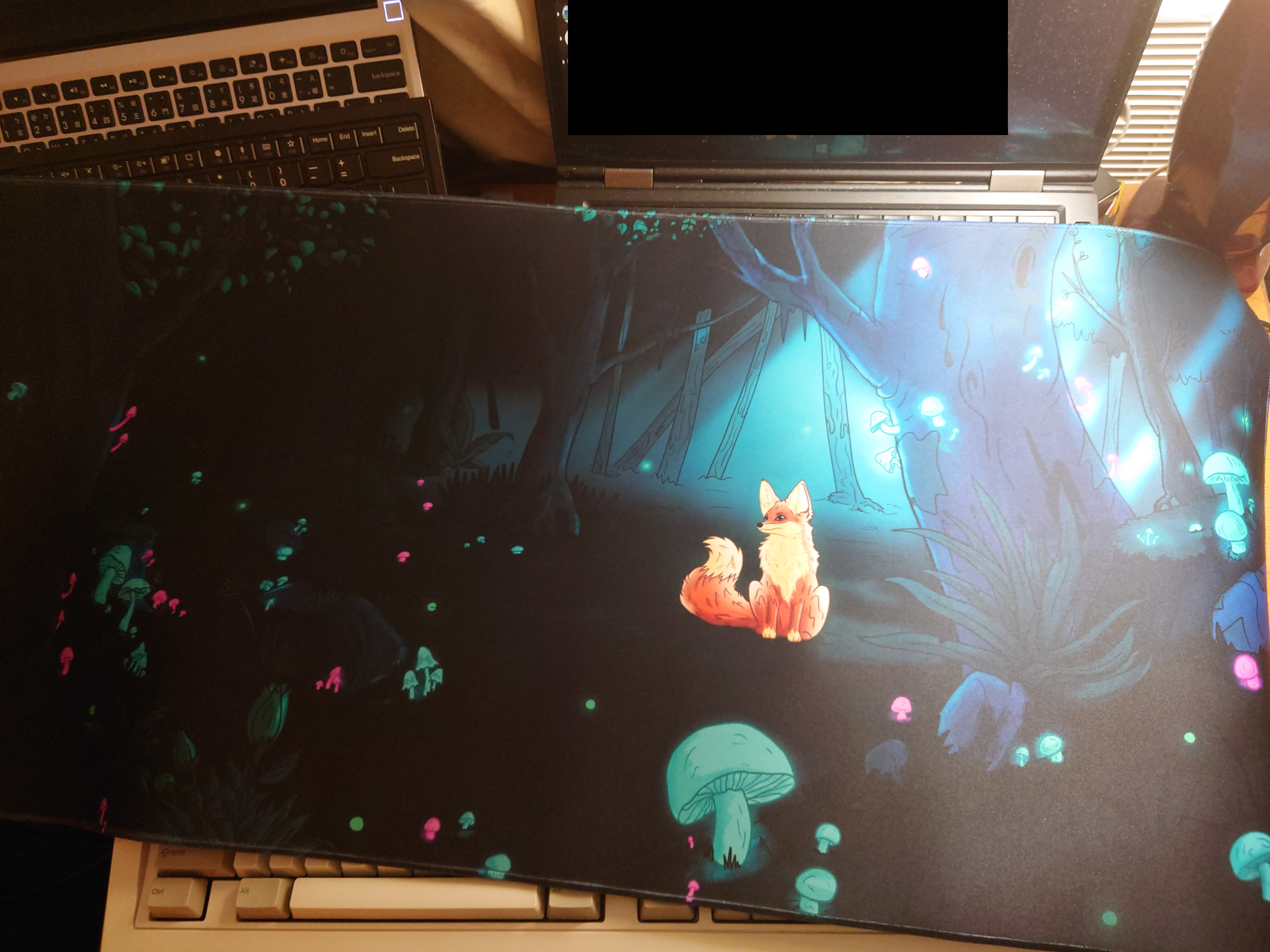
wouldn’t think I’d get the Forest Watcher keycaps set without getting
its matching
deskmat, would you? But that’s not part of the keyboard itself so it
has been excluded from the expenses calculation. [29]: Or am I simply too fast? Seriously though, I
get it, they’re a company with a very small team. But the experience is
still objectively bad.
]]>A Rare Mid-year Website Update2024-08-04T00:00:00.000Z2024-08-12T06:01:00.079Zhttps://chrisoft.org/blog/post/2024-08-04.htmlChris Xionghttps://chrisoft.org/Well here’s something you don’t see very often – a mid-year website
update from me. And it’s not just any website update: it’s a
decently big one, mostly because I’m …
Notekins is a minimal note sharing system that allows the user to
publish notes that resemble “Tweets” on Twitter, or posts on Mastodon.
The main difference is it explicitly has no support for social
interaction.
The slogan of Notekins is “Micro-blogging without the social media
nonsense”.
The idea of Notekins crossed my mind when I first saw Richard Stallman’s
Political Notes page [1] in 2013. Of course, like many of my
ideas back then, it went nowhere. I kept using the horrendous platform
from Tencent, and later Twitter, as the place to make my shitposts.
Throughout my (mis)adventures on Twitter, I noticed that the “social”
aspect of social media irritates me. Watching a peer’s post go viral
often induced inexplicable downheartedness and anxiety in me. Sometimes
my posts getting too much attention caused me to panic. In other cases
not getting the numbers I craved made me sleepless. The idea of Notekins
came back again, only to be driven off by me because “it didn’t go out
of control”.
In 2022, a middle-aged man with way too much money [2] and too little
wit decided to purchase Twitter, provoking mass immigration out of the
website. It was the best time to start Notekins, but I decided I could
settle with Mastodon for now. And thus I set up my somewhat short-lived
Mastodon account on c.im.
Later, dismayed by the lack of more friends on Mastodon, I realized I
no longer care about interaction from random users. With some
inspiration from some other person’s
website that roughly has the same idea, my quest to craft Notekins
finally sprang into action in late June 2024.
In the internal design documentation I had the following:
Required features
 - A command / script that, when invoked, brings up a text editor to start a new note.
 - A command / script that, when invoked, brings up a text editor to edit an existing note.
 - Basic elements of each note: content, time posted, last updated.
 - Basic markdown formatting in notes.
 - Attach images to notes (doesn't have to be inline).
 - Image thumbnail generation like the SBS.
 - An archive of notes as the user typed them.
 - Automatically import twitter/mstodn user archive.
 - Atom feed generation.
 - Inline custom emoji support.

Non-features

 - Any user interaction: reply, "like", or quotation.
   - No ActivityPub support.
 - View statistics / visitor identification.
 - Continuous scrolling. God I hate continuous scrolling.
You will see that, in its essence, Notekins is basically SBS with a
slightly different mode of content delivery. The only other major
difference is how the posts are created and stored – of course I have to
make shitposting relatively easy. Originally I wanted to give it the
slogan “Micro-blogging for the autistic”, but I reckon since people with
autism is such a big category, that slogan probably wouldn’t fit a lot
of people in the community, and would even be an insult to some of them.
Therefore the current slogan was adopted.
Anyway, I feel like my ability to write a large amount of code in a
relatively short period of time has drastically diminished. Notekins was
mostly feature complete by July 23rd, nearly one month into its
development and with about 60 KiB of source code written. That amount of
code seems to be what I could have written within a week when I was in
high school. That said, maybe I am just exaggerating the productivity of
a younger me too much, or the code I wrote back then was utter garbage
(not to say that the code I write now isn’t utter garbage), or both.
Once the main code base is largely finished, I spent some time
writing scripts that convert archives downloaded from Twitter and
Mastodon, as well as the aforementioned Tencent platform, into Notekin’s
format. These archives were made public [3] and can be accessed by following
their respective links in the main instance.
The frontend of Notekins can be pretty flexible. For the instances
running on my website I chose the minimalistic route, in the style of
the rest of my website. The frontend barely uses any JavaScript, and
those scripts aren’t responsible for the content anyway. Sure, this
means the browsing experience probably won’t be up to the modern web
standards. But much of the so-called modern web has become my pet peeve,
so it’s better to keep it out of my website.
Tired of being fed information that I have no interest in by
recommendation algorithms controlled by mega corporations
[4], I
finally took one of my friend’s advice and started using an RSS reader.
It sure feels good when I took back full control of what I read for the
first time in almost a decade [5]. Although I had to say that I was kind
of shocked when I found out the first few results returned by a simple
web search of “RSS reader” were all paid subscription services. It is
sad to see a feature once commonly found in web browsers become this way
[6].
To return the favor, I decided to add Atom feed generation to SBS. You can
now subscribe to my blog using the Atom feed linked in the
post listing pages, if you’re interested in reading my nonsense as soon
as it’s posted. Notekins was released with Atom feed generation support
built in, so if you want a dose of that as well, you may do it with this link.
As a side note, I realized that among my friends that own a dedicated
personal blog at least once in their lifetime, I am currently the one
who’s posting the most. And I’m saying that as someone who barely posts
twice a year… I noticed that I sometimes actually enjoy writing
random stuff, despite my constant issue of verbal constipation still
being present. Maybe unlike me, all my friends have a legit job that
does actual work [7], and don’t have time to write about random crap.
More QoL improvements
You can now close the panel on pages that may have a lot of texts.
This includes blog posts, Notekins, and the music player. Again a
feature that’s been long wished for.
Theming CSS files have gone through a full restructuring. How they
are loaded are also slightly changed so that now you shouldn’t see the
winter dark theme briefly before it switching to the chosen theme every
time. This serves as the prep work for a future change where theme
loading won’t require client-side JavaScript any more.
A new favicon made in 30 seconds was introduced, replacing the
previous one that was also made in 30 seconds but barely legible for
people using a dark browser theme.
And … that’s all?
Yes! Ah right, I also made some clarifications to the site-wide
privacy policy and guestbook moderation rules. Honestly I’m kinda
shocked that people are still leaving messages in the guestbook of my
website.
See you in the next website update … hopefully soon.
[1]: Linking does not imply my endorsement
of everything therein. [2]: that he
doesn’t actually own – it’s all funny tokens. [3]: Except one of them,
for a very good reason. [4]: fortunately, ByteDance was not one of them. [5]: Please, don’t be pedantic and be
like, “you never had or will have full control of what you read. Not
now, not ever”. Shush. [6]: That said, www browsers were usually paid products once upon
a time. Why are we evolving backwards (just like we are on many other
issues)? [7]: Please don’t correct me. Leave me alone in my
fantasy!
]]>The Station of Elyssima2024-03-02T00:00:00.000Z2024-03-09T04:43:58.148Zhttps://chrisoft.org/blog/post/2024-03-02.htmlChris Xionghttps://chrisoft.org/Chris hung up her last phone call of the day and started packing up.
She was on her final stop of an important business trip to the capital
city of Elysionia that lasted a week. She’s having a vacation once this
trip concludes, and now she’s dying for getting back her cozy little
home.
In Elysionia, people get around mostly by trains. There is an
extremely elaborate railway system that connects every single place of
importance in Elysionia. Its foundations laid out hundreds years ago,
the Elysionia Railways has been serving the country loyally and
contentedly over the years. Being inside continental Europe, it also
links to other surrounding countries.
Chris works for upper management of a private company. As part of her
job she travels around the country frequently and take the trains more
than a few dozens of times each year. Being a frequent rider of
Elysionia Railways, she’s familiar with the system enough that she can
recite the time table of various larger stations. With still well more
than an hour from her planned departure time, she is not in a hurry.
Chris is anxious for this very special train ride too, as the new
train station in the capital began to operate yesterday. She booked
specifically for a train that would depart the city from the new
station. She has heard that this new station was designed and built like
no other train stations in Elysionia, and she was ready to find out
what’s so special about this new station that supposedly will
revolutionize railway transportation in Elysionia.
A taxi is called and Chris tells the driver her destination. “Huh,
the new station?” Says the driver, “I heard a multitude was there
yesterday just to check it out. Are you going there just for a visit
too?” “A multitude of people… it must be really well designed,” thought
Chris. She’s busy being distracted by her own thoughts and didn’t pay
attention to answering the driver’s unsolicited question at all except
letting out an unclear murmur of “yes”.
Before long she is dropped off at the station. When she laid her eyes
on the station for the first time Chris was utterly stunned – the
exterior of the station looks exactly like a gigantic Gothic castle. She
is standing at least a few hundred meters away from the main entrance
yet the entire building barely fits in her field of view. A triplet of
sharp spires with beautifully engraved patterns point straight into the
sky. Towers surrounding them must still be as tall as the tallest radio
tower she has ever seen. Flamboyant traceries made up most of the
exterior openings. Born into a rural farming family, Chris could not
fathom the sheer amount of work that was put into the construction of
this station (nor could she understand why the city decided to erect a
huge Gothic castle in pretty much the dead center of Elyssima). There is
not a single railway track in sight – they are all cleverly well hidden.
The square in front of the station is still flooded with a large crowd
of people, all admiring this gorgeous building.
But Chris is here to take a train ride and she really does not have
the time to give this building a good look that it deserves, so she
proceeds into the station. However again her eyes are instantly hooked –
the pointed arches, the vault ribs which forms an endless mesmerizing
geometric pattern, oh and the intricately decorated crystal chandeliers
hanging around the center of the ticketing hall, which are even more
opulent than the ones that appeared in her childhood dreams. Chris could
not take a single step without getting amazed by something new that goes
into her sight.
A clock with hands long as a bus in the hallway brought Chris back to
real life – it’s 20 minutes before the train she is planning to take
will depart. The railway system of Elysionia works like a massive subway
– as long as one has paid the appropriate fare, they will be permitted
to travel between any places below a distance corresponding to the fare
on that day. Still, trains are run at different frequencies for each
destination. And in Chris’ case, if she missed this one she would have
to wait 3 more hours, which would mean she won’t be in her house until
midnight. Willing as she is to stick around, she still wants to be home
more, just by a little bit. She says to herself, “I shall give this
place a good visit someday,” and immediately got back into business –
looking up the gate on the information display and following the signs.
Everything is still so familiar.
Chris followed the signage to a three-way junction. It appears that
each path leads to a different set of gates. She took a sharp turn
following where the arrow points and heads to a lower floor, not even
noticing her dress almost being caught in the escalator.
She finds herself in a delightfully decorated corridor with gates on
one side and fine art exhibits on the other. She has some walking to do
though – the corridor is for gates 80 to 1, and her gate is 15 – so she
really doesn’t have time to appreciate the art, or to think about how
they managed to squeeze so many gates into a single corridor,
or why are there so many gates in this station in the first
place.
As the station was put into use only a day ago, it’s still early in
the transitional period: there are not a whole lot of trains here, nor
are there too many people who are actually taking a train. It soon
becomes apparent to her that the gates are fairly far apart from each
other, and even at her fastest walking pace, she will probably not make
it on time. So she started running. Chris is not good runner. She never
has been. And the fact that she is wearing an ankle-length dress
definitely isn’t helping. She looks at the wall of arts and sees her own
reflection on the fresh glazed wall tiles – her long, unblemished white
dress flying high from all the velocity that she usually never gets to
have. Similarly set in motion is her long, black hair, which is
spreading in midair. The reflection is so clear that she can even make
out the frills and cutwork on the hemline – even threads on the needle
lace, which are not unlike the ribs of the traceries she saw moments
ago, just vastly different in scale. She got a strong sensation of déjà
vu from what she just saw, as it reminded her of a series of daydreams
she often had when she was a little girl. But this isn’t a great time to
fantasize about her prior dreams, is it?
50, 49, 48 … Chris is steadily passing by the gates. It still puzzles
her why are there so many gates in this station. She must have seen
number as large as 200 when she was at the junction. Is there ever going
to be enough rolling stock in Elysionia to warrant so many gates? Also
why are they using gates at all? Train stations usually have
just platforms don’t they? Is this why they said the new station would
revolutionize railway transportation in Elysionia?
30, 29, 28 … Chris is running out of her breath. She takes a look at
her watch and realizes that she still has 10 minutes left. “Surely I can
make it to gate 15 in ten minutes,” she says to herself. There are few
people in this section of the station, and all the benches are vacant.
She stops to take a quick breather. Mindlessly she glances at the floor
brilliantly lit up from atop and saw her own image. “Holy heck,” mutters
Chris, “it must take a lot of work to keep this station under such
condition in the future.”
When Chris passes by gate 25 she notices something is off. She halts
her steps and looks back.
Gate 27
Gate 26
Porte 25
The language of the sign changed for some reason. This baffles Chris
and makes her freeze in place for a good second. She has learned a
little bit of French in her youth and can indeed understand the word.
She just couldn’t understand why – Elysionia is an English speaking
country and as long as English remains the lingua franca of the world,
there really isn’t a good reason to change the language midway here.
Maybe this gate is reserved for trains to and from France? Who
knows…
It didn’t take long until she notes another change in language. This
time it’s German.
Porte 22
Bahnsteig 21
Only that Chris doesn’t know any German and wouldn’t be able to tell
if the sign stands for “Slaughterhouse 21” with their scary long
compound words. But she also feels a little bit reassured as her
suspicion that these gates may be reserved for trains that connect to a
different country could be right, or so she thought.
As she assumes the bizarreness would end here, she finds out she was
wrong, VERY wrong. Because this is what she sees next:
Imbarchi 19
INTROIRE·IN·CVRRVM 19⅓
INTROIRE·IN·CVRRVM 18
“What on earth is happening,” says Chris, “is this station going to
pull a Platform 9¾ on me? Where would trains using this gate go anyway,
Vatican City?”
Just as she couldn’t stop admiring the exterior of the station when
she just arrived, these signs don’t stop surprising her, and in an
increasingly disturbing manner.
Chris wasn’t good at math when she was in high school. She doesn’t
even know what half of these symbols could ever mean. She doesn’t think
she has seen the symbols on the last sign in any of the languages alive
in the world nowadays either. What is this now, a time machine? As her
confusion reaches the peak, Chris hears from the PA system:
“Dear passenger Chris Xephyr, the train you are taking is departing
in 3 minutes. Please board the train from Gate 15. Thank you.
Cara Chris Xephyr viatrix, currus qui veheris abibit in tribus
minutae. Amabo te, introi vehiculum ab porta XV. Gratias tibi.”
“Who designed this godforsaken place…” exclaims Chris, “how does it
know my name? This isn’t an airport is it?” She checks the gate closest
to her, and there is no jet bridge to be seen, only rail tracks. Chris
has never heard a single word from the PA system ever at any station she
has been to in Elysionia. She scrambles to find her booking information,
only to find out that it does say “New Elyssima” there. There is no time
of departure or name of the passenger, as the booking system never asked
for them. The station should never have known her name or which
train she is taking. Her confusion grown into fear, Chris starts running
again, even faster than before, almost like she’s being chased by a
deadly monster that would instantly consume her if she gets caught.
As Chris runs on, she feels the passing of time is slowing down, her
limbs increasingly heavier, and gates seemingly becoming farther
separated from each other. She could not hear a thing, not even the
sough of wind passing by her ears. Her vision becoming darker, Chris
starts to wonder how long she could keep running. She hasn’t seen a
single person since the signs started speaking nonsense. She starts to
contemplate her life choices, as one would inevitably start doing under
such situation: why she couldn’t end the last call a bit earlier; why
she had to book a ticket from the new station; is it really worth the
agony she is experiencing right now; what if she went down the wrong way
at the junction; why she wouldn’t choose to inherit her family land and
be a farm girl staying at her hometown – after all if that were the case
she wouldn’t have to endure any of what she has gone through in the last
20 minutes. She no longer has the desire to revisit this place
afterwards – if this is the future of railway transportation in
Elysionia she might also avoid travelling by train altogether in the
future – still she’s kind of curious what could be inside those tall
towers she saw when she was outside the station. But obviously this is
not the time to find out. The only thought in her head right now is to
get out of this cursed place somehow.
Chris runs into a person when she’s deep in her thoughts. She
apologizes for her carelessness and is about to move on, only to realize
that she would likely be able to find nobody that could help her if she
missed this chance. Desperately she asks the person whether they know
where gate 15 is. The person, not to Chris’ surprise at this point,
started to speak complete gibberish in response.
Chris doesn’t want to give up this easily. She continued, with the
heavy breathing she got from all this running and almost in a pleading
voice:
“Did you hear the PA? I am that Chris Xephyr. Does hearing
the PA calling out your name in a train station seem perfectly normal to
you?!”
Again, the person started to speak gibberish. Their demeanor seems
confident, so they probably understood Chris just fine. But she isn’t to
able to make out anything whatsoever from their speech, not even their
body language. Frustrated, she thanks the person and resumes her
seemingly impossible quest for gate 15.
Before she is able to run more than a couple of steps, Chris
collapses to the floor. The hem of her dress, still moving under
inertia, flies ahead and covers her torso. A gentle breeze from the deep
side of the corridor, presumably for the purpose of ventilation, blows
it back to where it belongs, with the cutwork flapping around in the
breeze. The person from whom she just sought help is now nowhere to be
found, almost like they have never been there.
Chris wakes up finding herself in the warm afternoon sun lying
against her broom. She was again daydreaming during her housemaid duty.
Fortunately there isn’t anyone home to catch her in the act. She rushes
to the living room to find today’s newspaper, its headline reading “New
Elyssima Train Station Project Dismissed”. She lets out a sigh of relief
and continued her work.
]]>2024 Site Update2024-02-29T00:00:00.000Z2024-02-29T05:59:43.791Zhttps://chrisoft.org/blog/post/2024-02-29.htmlChris Xionghttps://chrisoft.org/I figured I wanted to give an update on this website (and my current
state in general), so why don’t do it on the leap day…
Blog
The blog has been renamed. Its new name is “Specluncam Ursae”
(Bearess’ Den). And the link has been condensed into a single one
“Specluncam Ursae visere” (Visit the Bearess’ Den).
The name change has been on my mind for years actually. I enjoy word
play quite a lot, and my surname (which literally means “bear” in the
language) is an excellent subject of word play – also a source of
bullying when I was a kid. Since the blog is a place where I just
randomly dump stuff, I figured the name “bear’s den” would be a suiting
name, as I treat it as the home to my thoughts. (Well, not
every single one of them, as you’ll see soon…) As for why it’s
in Latin, that’s because I started naming things in Latin whenever I
feel like it since I started learning the language.
Removing the categories “Development blog” and “Nonsense blog” is
another long overdue change. They were actually a leftover of the
original PHP-based version of SBS. By the time tags were
introduced to SBS version 2, those links have been de facto
obsolete. I just didn’t find the excuse to remove them.
“Why are you using the feminine version of the word ‘bear’?” you may
ask. Well the reason is twofold: first is to disassociate with the
hairy, non-heterosexual male stereotypical imagery of bears. The second
reason is the same as why I wrote “However according to the Haskell
tutorial found at haskell.org, "chirs" == sort "chris" and
is her twin nemesis. That would be a very playful joke.” on the
homepage. [1]
One last point here. I decided to shift the focus of this blog to
more technical subjects. The majority of future posts will be on
technical aspects of my personal projects – I’m going to leave my
profession work (if I can call it that) elsewhere. Reviews and relevant
personal updates will still be posted. Political stuff will still be
kept at a minimum. But I promise those old, extremely cringeworthy posts
on trifling matters will be no more – I was reviewing some of those old
posts recently and part of me really wanted to take
them off the website… It’s really for everybody’s interest that I keep
those to myself…
As for the unfinished posts… no they will probably never get
finished, ever.
Home Page
There were a few readability improvements made to the home page. One
of them is that the about section no longer requires JavaScript to load.
This “noscript support improvement program” might extend to other
sections in the future as well. Besides that, nothing really changed.
There will be no design change to the home page in the foreseeable
future. The random design I used for QMidiPlayer’s documentation is a
surprisingly serviceable template (at least to my eyes).
I may reorganize the list of projects in a different way some
day.
Serving the Website
The URL on the filestorage subdomain is now served through
Cloudflare’s CDN. This will have a positive impact on the load time of
blog images and tracks in the music library, but not much else.
Other Online-presence Stuff
I’m not on Twitter anymore. [2] I have uninstalled their mobile application and blocked
their website (at my own discretion). I’m only keeping the account
because Musk is a narcissistic dick, and doesn’t let me see shit on that
website if I somehow have to obtain a certain piece of information from
it without logging in (I really should use a burner account for that
purpose shouldn’t I?). I now post my random crap on Mastodon, on a
public instance (c.im).
I’m considering to set up a private email server (once again) as my
personal gmail account is flooded with useless junk and my work email is
flooded with another type of junk. Once that’s done I will update my
homepage to reflect that.
Also I somehow restored access to my supposedly deleted Bilibili
account. I don’t intend to post much there but I guess it’s back
now.
I think that’s it? Now I should really get some sleep to recover from
my sleep deprived ass…
[1]: Well, the reason I listed on the homepage is
actually a lie, but the real reason doesn’t really matter
here. [2]: Fuck Melon Husk. I repeat, FUCK
MELON HUSK! No I don’t want to have sexual intercourse with
him.
Funny enough, the origins of this project has nothing to do with
R-BUS or ADAT.
Ideas to build a digital only version of the EDIROL SD-80 surfaced in
early 2023 as an extension to my SD-80 modding plan. Beacuse my SD-80 is
half broken (headphone amp on analog output 1 fried due to my stupidity,
see my second
SD-80 post for how it happened) and I only ever record it through
its digital outputs anyway, I believe I can drastically reduce the
footprint of it by taking out all the analog outputs and removing the
now unused ±15V rail, making the device USB bus powered at the same
time. There was also plans to add a second digital output to the modded
SD-80, however the plan was never finalized, let alone implemented
because of my lack of proper electronics knowledge and soldering skills.
The idea was therefore shelved.
Meanwhile in early 2022, I acquired a Roland XV-5080 (which I still
have a long overdue review to write). I was also only recording that
thing digitally and sometimes felt that wasting the other 3 stereo
outputs is a shame. I did a bit of research and apparently the R-BUS
port on its back outputs all 4 stereo outputs of the synth. Later I
found out there was the DIF-AT and DIF-AT24 that can convert R-BUS to
ADAT which is still fairly common on modern audio interfaces. However
for a small box that doesn’t really do much, asking price for the DIF-AT
is absolutely crazy – every single listing I saw was ~$200. And the
DIF-AT24, which supports 24-bit ADAT output (in contrast to DIF-AT’s
20-bit output), is pretty much unobtainium. So I decided to live with
recording through its S/PDIF output for the time being.
In September 2023, by pure coincidence, I found a listing on ebay of
a chip described as “ADAT optical encoder/generator”, which was the coolaudio
V1401 that later would become the heart of my design. After reading
its datasheet I decided it would pretty much make my SD-80 digital mod
trivial, with the added benefit of carrying both stereo output channels
on a single port. So I opened up the service manual for SD-80 and
started to study which pin each signal should go to. However I quickly
realized that performing the mod would require soldering around the XV
chip inside the SD-80, which is still a thing that I’m not really
willing to do; and that I could easily test out my theory on XV-5080’s
R-BUS port because the digital audio output pins on XV-5080’s R-BUS port
is pretty much directly connected to the XV chip through an
inverter.
To summerize … I came up with a solution for a problem that I made up
for myself.
Background check on the chip
The seller of the chip claims the chip is an equivalent of the AL1401
from Alesis, which sounds quite interesting as Alesis is actually the
company behind ADAT (Alesis Digital Audio Tape, as for why it’s a
tape not a optical interface… that’s a story for another time).
Suspicion that this chip is a Chinese clone arose. So I did a bit of
background on the company … [1]
Turns out, of course it is. While its roots can be traced to the US
in the 90s, design team of coolaudio is now located in China
[2]. Better still, it’s a brand
of Music Tribe, which is Uli Behringer’s company. Yes it’s the same
person who founded Behringer which is best known as the legal (/s) clone
audio equipment manufacturer. No wonder why coolaudio’s product
portfolio is all clone chips.
Well, the original AL1401 is pretty much impossible to find nowadays,
so I really have no choice don’t I?
Ill-fated commencement
I ordered the V1401 chips before my end-of-year vacation travel. When
I returned from my vacation, I found these in my mail box:
Suspicious packets
which may look suspicious to law enforcement… but they are actually
just chips. Not the edible kind.
My prior experience with electronics is only limited to reading
schematics and disassembling (and destroying in the process) hundreds of
home appliances. So I guess I have seen hundreds of printed circuit
boards but I haven’t ever made or designed one of my own. I did take a
class during my undergrad that involved programming FPGAs, which did
have a “drawing schematics on a computer” component to it, but that
didn’t have anything to do with PCB design.
Since I do not have any prior experience working with EDA software, I
toyed with an Chinese online EDA toolkit that literally has “easy” in
its name (EasyEDA) and drew a tentative schematic for the supporting
components. Apparently it wasn’t that different from what I used when I
was taking the FPGA class, but at this stage I still haven’t confirmed
many aspects of the characteristics of R-BUS yet. As a result there were
a multitude of issues with this schematic. However it did help me come
up with a list of components (“bill of materials” in more professional
terms) needed for the project. I ordered these together with some
prototyping supplies online, hoping to actually build a prototype once
they have arrived.
The error-riddled
schematic
I need an audio interface with ADAT inputs because none of the bunch
I already own has one. Since the Scarlett 18i8 3rd gen was on sale for
$360 at the time, I decided to get one.
When I was reviewing the datasheet for the components I ordered
[3], I
found out that I’ve ordered the wrong optical transmitter. The part I
ordered was TOTX1353 which only supports up to 500 kb/s data rate … less
than 1/20 required by an ADAT data stream. However for some stupid
reason that I couldn’t recall, I decided to try prototyping with it
anyway.
I soldered one of the V1401 chips to the SOIC carrier board. As this
time I used plenty of proper, good quality flux as suggested the MacBook
repair guy Louis Rossmann [4], the result didn’t look
nearly as bad as my previous SMD soldering attempts and I was quite
happy with it.
On the following day I started showing mild symptoms of a common
cold. Later that night a fever kicked in. The next day I decided to use
an expired Cornweed [5] test kit on myself and found out Cornweed was
growing inside me (hence the name of this subsection).
I got a week off from my workplace to get rid of the Cornweed. Since
I already felt much better after one day, I started breadboarding. It
was finished pretty quickly. But soon after that I found out there was
more than one thing wrong with the optical transmitter module I chose –
the module doesn’t have a drive circuitry built in and it pretty much
just a bare LED. There is no way in hell that it can be directly driven
from the output of a 74LS04. The LED in the transmitter only barely
lights up when the output is active. At this point I finally realized
that I can’t use this out of spec piece of crap in the final design
anyway, so I placed order for a few transmitters that are more fit for
the job.
The chip on its
breakout board
The breadboard
prototype before it was working
When I was trying to wire in the DB-25 terminal block, I found out
that I don’t have the proper flathead driver for the screws. So I had to
get one of those as well.
Once I really had all the items I need, I started putting things
together. The process was fairly easy but the audio interface didn’t see
the ADAT signal on the first attempt. I double checked all the
breadboard connections and inputs to the chip, which appeared to be all
correct. Feeling tired, I removed the prototype from my desk to work on
it the following day, unplugging all the cables in the process.
To my utter surprise, the thing straight up worked when I plugged it
in on the next day. It turns out that the port on the new transmitter is
very tight and takes quite a bit of force to insert the plug all the way
in.
Working prototype!
Designing the board
I decided to switch to KiCad soon after I started the actual
prototyping process, probably due to my bias towards free software.
Drawing the schematics wasn’t hard. Although I did have to read the
manuals to find out how buses work in KiCad.
There is no symbol for the V1401 chip in KiCad’s default library, and
no symbol or footprint for the optical transmitter. I had to learn how
to draw these and make them myself. Fortunately the process is pretty
straightforward and the datasheet has everything I need.
I spent some additional time studying the digital / analog audio
output section of XV-5080 to find out the format of digital audio data
coming out of the XV chip. Once that was done I was able finalize the
schematic. I started learning routing in KiCad soon after that. However
that effort was put on hold as soon as I realized I should really
validate the schematic on breadboard first.
Once I got the breadboard version working, I started working on
routing the board again. It started pretty difficult, as certain
crossings couldn’t really be avoided. However once I started making
liberal use of vias the problems got solved pretty quickly. I then
recalled seeing large ground plane on most circuit boards that I’ve laid
my eyes on and found out those can be made in KiCad with “zones”.
However for some (not completely insane, but still pretty stupid) reason
I thought adding too much copper could add to the manufacturing cost, so
I was … quite stingy with the zones. Maybe I should fix it in the next
revision.
Finally I added some personal markings on the board. I decided to try
the svg import feature of KiCad and drew something in Inkscape within a
minute. Once placed on the board it actually looked pretty nice. Yes it
is a Touhou reference, now stop asking why.
Unfinished
schematic in KiCad
First attempt at
routing. The board was laid out very differently.
Board production and final
assembly
The design was now ready and I started looking for PCB manufacturers.
I settled between a few Chinese manufacturing providers for price
considerations. My final manufacturer of choice was JLCPCB, mostly
because they have the best reviews in China. I submitted the files and
waited anxiously for the boards to arrive.
The boards arrived astonishingly fast. In just 5 days it went through
the entire production sequence as well as the Pacific Ocean, and arrived
at my door steps. I test fit all the components, which all fit just
fine. Next was the final assembly which also went pretty smoothly. After
a quick test the board was found to work perfectly. I was actually
shocked that the very first PCB designed by me worked first try. To be
fair the board itself is pretty simple. It was figuring out the R-BUS
protocol that made the project slightly tricky. Actually I’m pretty
surprised to find out that nobody has done the work already given the
service manual of XV-5080 has been floating around on the Internet for
many years now. Anyway, this has been a fantastic starter electronics
project for me and the process has been quite enjoyable.
Box from JLCPCB
It’s between my
fingers…
First two
components installed
Assembly finished
IT’S ALIVE!!
Full project timeline
2023-09-27: V1401 chip found on ebay.
2023-12-09: V1401 chips bought from ebay seller.
2024-01-10: Schematic attempt with EasyEDA.
2024-01-11: First batch of components ordered.
2024-01-17: V1401 soldered to breadboard adapter.
2024-01-18: Second batch of components ordered.
2024-01-20: Switched to KiCad. Schematic finished except missing
symbol and footprint for optical transmitter.
2024-01-21: Breadboard built. Created symbols and footprint for
optical transmitter in KiCad.
2024-01-22: Started learning PCB layout in KiCad. First attempt to
route the PCB made. Routing halted later that day.
2024-01-26: First working breadboard prototype. Routing resumed and
finished the same day. Learned how to use zones in KiCad. PCB design
revised.
2024-01-27: PCB submitted to JLCPCB for production. 10 boards
ordered.
2024-02-01: PCB arrived. First board assembled and passed
testing.
Full material cost
This includes all orders placed specifically for this project,
including stuff that can be later used for other purposes. Prices listed
before VAT.
Item
Qty
Vendor
Price Total
Half-size breadboard
5
Adafruit
25.00
Breadboarding wire bundle
2
Adafruit
9.90
Adafruit Perma-Proto Super Pack
1
Adafruit
34.95
Hook-up Wire Spool Set - 22AWG Solid Core
- 6 x 25 ft
1
Adafruit
15.95
Hakko Professional Quality 20-30 AWG Wire
Strippers
1
Adafruit
17.50
SOIC-20 breakout 3 Pack
2
Adafruit
9.00
Adafruit Parts Pal
1
Adafruit
19.95
TOTX1353(F)
10
DigiKey
92.88
16SEPC100M+TSS
20
DigiKey
11.56
SN74LS04N
25
DigiKey
19.30
CTS 208-4
10
DigiKey
5.76
DB25-SL-25
10
DigiKey
12.60
CFR-25JB-52-1K
100
DigiKey
2.47
CFR25SJT-52-2K2
100
DigiKey
2.47
1N4002B-G
30
DigiKey
4.32
25SEP10M+TSS
20
DigiKey
18.84
C320C104K5R5TA
50
DigiKey
5.05
FCR684208T
10
DigiKey
33.75
V1401
10
ebay (av13)
30.00
JUXINICE DB25 Male to Male Cable 3 feet,
26awg Tinned Copper Wires,Double-Shielded with Foil &Metal Braid,
D-SUB 25 pin Cable RS232 Serial Cable in Black
1
Amazon
12.99
Antrader 2PCS DB25 Breakout Connector
D-sub 25-pin Female Adapter RS232 to Terminal Board Signal Module
1
Amazon
11.99
Focusrite Scarlett 18i8 3rd Gen USB Audio
Interface
1
Sweetwater
359.99
Mako Driver Kit - 64 Precision Bits
1
iFixit
39.95
PCB Production
10
JLCPCB
14.50
Grand Total = $810.67
Potential future work
First of all I need to fix the stingy ground plane.
V1401’s datasheet isn’t very clear on whether it can generate a
24-bit ADAT stream. Recordings made with the Scarlett 18i8 seem to have
the full 24-bit resolution, but that could be due to interpolation done
by the audio interface or operating system. Testing this requires an
oscilloscope which I currently don’t have.
It is highly feasible to implement an ADAT encoder / decoder in
software on cheap microcontrollers like the rp2040. The ADAT protocol is
documented here and
seems fairly straightforward to implement. This also has the added
benefit of making sure that 24-bit ADAT is really supported. However
this will also more than likely require an oscilloscope for debugging.
I’ll also have to learn rp2040’s PIO programming and theories on PLL
operation, both from scratch.
Exposing the MIDI interface on R-BUS also seems possible. However it
seems that XV-5080 doesn’t make use of the MIDI interface on R-BUS
[6].
Maybe I’ll add more Touhou references to the silkscreen, who
knows.
I want one! What should I do?
First of all I’d suggest giving the manual
a read to make sure this board really does what you want.
If you have made up your mind to get a board, I have some bad news
for you. Unfortunately right now there’s no straightforward way obtain
this board. Mainly because I have never sold anything online. Also this
board is bound to be a very niche product, and possibly can’t even
recover the development costs if I decided to sell them. Those are the
reasons why I currently have no plans to sell the board.
So right now your options are:
Build the board yourself. The design is fully open source and build
instruction is included in the manual. If you are comfortable with
electronics DIY projects, this is probably your best bet.
Let me know you want one! Right now I still have a few
pre-production boards lying around. As long as you’re willing to cover
the terrible USPS shipping rates I’m willing to assemble a board and
send it your way. Of course you’re welcome to pay a little bit more… but
any excess for now will be treated as donations (a “pay what you think
it’s worth” model) – as I don’t have pricing fixed yet. Also if enough
people have expressed interest in the board I might actually start
selling them…
You’re an idiot and
your design is trash!
First of all, thank you. I am indeed a massive idiot.
If you have suggestions on how this board could be improved, please
consider sending them to me. As a beginner in electronics design I can
definitely use any piece of advice coming from pretty much anyone in
this field. Any constructive suggestion will be greatly appreciated.
Of course other types of contributions will also be appreciated. For
example this board currently lacks any kind of enclosure as I have zero
idea how to create 3D models for real-life object manufacturing. Help in
this space is desperately needed.
Acknowledgment
I’d like to thank Palto for being extremely
supportive towards this project, including putting up with my endless
DMs on Discord.
[1]: Not to shit on the country or
anything, after all I’m from said country … but Chinese clone chips are
notorious for being unreliable in general or straight up not
working. [2]: “World
Class Management &Technical Team: One of the most extensive design
service companies in China” [3]: which is probably a dumb thing to do. I should have read
through all of them before placing the order. [4]: He doesn’t really do the repairs
himself nowadays any more, does he? [5]: That thing which destroyed 2020 to 2022
for countless people misspelled deliberately to avoid unwanted
attention. [6]: See the section on XV-5080 in RPC-1’s manual.
R-BUS (also called RMDB2 / RMDB II on older products) is an obsolete
proprietary interconnect format that carries bidirectional MIDI and
digital audio data created by Roland. It was used on Roland products
released from the late 90s to early 2000s.
There was a physically incompatible and much rarer predecessor of
R-BUS called RMDB (Roland Multipurpose Digital Bus). RMDB is not the
subject of this article.
Much of the information here is gathered from schematics inside
service manuals for various Roland products, mainly the XV-5080 and
VS-2400. These can be easily found with a search through the
interwebz.
This article assumes minimal electronics knowledge from the reader.
As a matter of fact, the author is also a layperson in this space.
Report of any issues in the article would be appreciated.
For other R-BUS related stuff on this website, please visit this page.
Devices with R-BUS support
Here is a not necessarily complete list of Roland products that comes
with at least one R-BUS connector:
Mixing Console
VM-3100Pro
VM-7100 / VM-7200 (3 ports on optional VM-24E I/O expansion)
Studio Workstation
VS-2400
VS-2480 (2 ports)
VSR-880
Production Studio
MV-8000 / MV-8800 (available through the MV8-OP1 audio I/O
expansion)
Synthesizer
XV-5080 (output only)
Interface Modules
RPC-1 (Conventional PCI R-BUS interface)
ADA-7000 (A/D converter)
AE-7000 (R-BUS <=> AES/EBU converter)
DIF-AT (R-BUS <=> TDIF & ADAT converter)
DIF-AT24 (R-BUS to ADAT and MIDI interface, 24-bit)
Pin definition
Connection for VS-2400 and XV-5080 is extracted from their respective
service manuals. Pin usage inferred from these connections.
Roland has only disclosed partial information on the wiring scheme
used by the official R-BUS cables. [6]
However, it’s rather easy to infer the full wiring scheme from that
information. This has been confirmed by other third-party sources.
[7][8]
Usage 🖙
Pin on one side
is connected to
Pin on the other side
🖘 Usage
+5V
1
13
+5V In
SDOUT1
2
12
SDIN1
SDOUT2
3
11
SDIN2
SDOUT3
4
10
SDIN3
GND
5
9
GND
SDOUT4
6
8
SDIN4
NC
7
7
NC
SDIN4
8
6
SDOUT4
GND
9
5
GND
SDIN3
10
4
SDOUT3
SDIN2
11
3
SDOUT2
SDIN1
12
2
SDIN1
+5V In
13
1
+5V
MIDI TX
14
25
MIDI RX
GND
15
24
GND
GND
16
23
GND
GND
17
22
GND
FS Out
18
21
FS In
GND
19
20
GND
GND
20
19
GND
FS In
21
18
FS Out
GND
22
17
GND
GND
23
16
GND
GND
24
15
GND
MIDI RX
25
14
MIDI TX
Electrical
characteristics of the interface
Power
The +5V supply is derived straight from the +5V rail that goes into
the main board, with polarity protection (both in the XV-5080 and
VS-2400) provided with a Schottky diode, and sometimes current protected
with a thermistor (not present in the XV-5080).
The +5V pin measured 5.28V to ground on my XV-5080.
Digital Audio
The format of digital audio portion of R-BUS resembles I²S, but with a few
key differences:
There’s no bit clock.
Sample data are transmitted as if they are 32-bit, despite only the
first 24-bit is being used.
Logic level on the data line is inverted.
To give a standalone description of the R-BUS digital audio
protocol:
The frame sync (word clock) signal runs at the same frequency as the
audio sampling rate.
When frame sync is low, left channel of each channel pair is being
transmitted, otherwise right channel is being transmitted.
Each half cycle of the frame sync clock is divided into 32 periods,
during each of which a bit of sample data is sent on every serial data
line.
Sample data are sent most significant bit (MSB) first. Each sample
is 24-bit long, leaving 8 bits unused at the end of each half cycle of
frame sync.
Logic low on the data line means the bit being sent is 1, and high
means it’s a 0.
If you’d like a timing diagram of all this, please look up the
datasheet of TC9271 made by Toshiba (used in the XV-5080 as its S/PDIF
encoder chip). Figure 1b is a good representation of the relationship
between frame sync (LRCK in the datasheet) and audio data. The LRS=H
case in figure 3a shows how the frame sync signal sent over R-BUS should
be interpreted.
There are 4 serial data lines in each direction, giving the 8
channels in total for each direction. Each direction has its own frame
sync signal, which is shared among all data lines in that direction.
MIDI
What is sent over the MIDI wires in the R-BUS cable has not been
confirmed by me.
The MIDI interface is used differently on different Roland
products:
XV-5080 seem to ignore everything on the R-BUS MIDI interface,
despite having all the facilities to handle it. Roland disclosed this in
RPC-1’s user manual (see the section on XV-5080). I have not tested this
claim.
MV-8000 series with MV8-OP1 installed can use the R-BUS MIDI output
as a separate MIDI port. Data going into the R-BUS MIDI port will be
mixed with the built-in MIDI input.
VM-3100Pro can pass through the MIDI data to its built-in MIDI
ports, and can control the host sequencer if connected to a
computer.
V-Studio products can receive MIDI clock over R-BUS.
Any aspects / products not mentioned here are unknown to me.
Roland calls the signals that go in to / out of these pins “IPC” or
“PC”. [9]
Inside both the VS-2400 and the XV-5080, the signal is generated /
goes into a dedicated microcontroller (a M3888 1M2), specifically, a
pair of its UART ports. An inverter is between the R-BUS connector and
the MCU in each direction of the signal.
Roland claims in VS-2480’s manual that R-BUS carries 8 channels of
bidirectional digital audio (which are already fully accounted for in
the previous section), plus MIDI, MMC (MIDI Machine Control) and MTC
(MIDI Timecode).
The factual portion of this section ends here. Everything below is my
guesswork. Since MMC commands and MTC are both usually just sent as
normal MIDI messages, it’s a reasonable assumption that, the only thing
that is transmitted over these wires is MIDI, which is also why I named
them MIDI TX/RX in my pin usage chart.
Since MIDI is pretty much just UART with a bit of isolation, I would
venture a guess that the signal sent / expected on these two pins is
just inverted MIDI UART signal.
It would be pretty trivial to build some experimental circuitry to
test my theory. Maybe I’ll do it one day. However this may end up with
nothing – as the XV-5080 will probably just ignore the MIDI data going
through R-BUS.
[1]: Serial data
output (input). Overline indicates that 1-bit is represented with low
logic level and 0-bit with high logic level. Same
below. [2]: Not connected. Same
below. [3]: Inferred from wiring scheme [4]: Often abbreviated
as TX. [5]: Often abbreviated
as RX. [6]: R-BUS,
RBUS, RBC, RBC-5: Where Can I Find an R-BUS Cable? [7]: Roll
your own: R-Bus Cable Pin Out. [8]: DIY
R-BUS cable for 20€ [9]: I have no idea what these could mean. My
software-dominated brain tells me they stand for “Inter-Process
Communication” and “Program Counter” but they clearly stand for
something else here.
]]>Framework Laptop: Repasting & Two Year Report2023-11-13T00:00:00.000Z2023-11-28T05:29:52.924Zhttps://chrisoft.org/blog/post/2023-11-13.htmlChris Xionghttps://chrisoft.org/Updated 2023-11-27: Added stuff on the RTC battery replacement module
installation and part swap.
“Repasting” with PTM 7950
I’ve been reading testimonials from people replacing thermal paste in
their laptops with
PTM
7950, mostly praising the amazing effectiveness of the material,
with some reporting a drastic 20 degrees C reduction. I was skeptical of
such claims. Such temperature reduction just seemed impossible to me,
especially considering the conductivity of PTM 7950 is pretty much the
same as most non-terrible thermal pastes on paper.
Anyway I decided to give it a try myself when I saw this mystic
material on sale for barely above $10 the other day.
The repasting process went pretty smoothly. However I did notice that
the screw marked “3” on the heatsink seemed a lot looser than the other
two. Maybe that has something to do with the horrible thermal I had
before…
Time for the results. Spoiler alert: it’s impressive. I cannot do a
scientific before and after comparison, but I did run a few of my
day-to-day tasks as tests. Idle temperatures are already much better:
50°C before vs 38°C after. Under a short code compilation load (around 5
minutes), the initial temperatures are similar (~100°C before vs 96°C
after), but the CPU was able to boost much closer to its designated PL2
power (58W vs 45W, advertised PL2 being 60W). After the processor
stabilizes at its PL1 power it goes down to below 80°C, while the under
the old paste it was a constant 90+°C. The task also finishes ~10%
faster than before.
While my results aren’t as insane as some others got, it was still
huge. The biggest improvement is that merely browsing the Internet
without setting CPU power policy to powersave is now bearable – I’ve
mentioned in my previous post that the fan noise of the Framework laptop
is a pretty big issue for me personally, as the noise it emits when the
processor is above 55°C is extremely distracting in a quiet room. I also
got ~10% more performance out of this CPU, which probably makes this the
best $10 I spent on tech-related products for the past few years.
So would I recommend the PTM 7950? Yes, but only when you
have to do a repaste. As I mention before, I was skeptical of
claims about the magical power of PTM 7950. To be clear I wasn’t
doubting the thermal conductivity of the material, but rather the cause
of the temperature reduction people have been reporting – maybe their
old paste had completely dried out, or the factory paste application is
utter garbage. For my specific case – I have my reasons to suspect the
same due to the aforementioned loose screw on the heatsink I had. While
I have never touched the heatsink assembly myself since day one until
today, and the thermal profile of the machine was fairly consistent for
the past 2 years, I couldn’t rule out everything. So I don’t really know
if it is a factory defect or something else. Also I’ve seen reports that
certain
newer laptops already use similar phase change material as its TIM.
So if you’re considering to repaste your brand new laptop (which isn’t
always a great idea in the first place) with PTM 7950, do remember to
check if that’s the case.
Factory
thermal paste application
Factory paste
removed
PTM 7950 applied
Semi-long term review
Disassembly reveals …
First disassembly
in 2 years.
A few things jumped out when I opened up the laptop for repasting.
The first, very obvious and somewhat worrying one is the mildly swollen
battery (also known as SpicyPillows). I did not run the laptop a lot on
battery during the first year, but the second year saw more usage with
it unplugged (still not as frequent as my ThinkPad X1 yoga 1st gen). The
swelling isn’t anywhere near extreme, and there hasn’t been a
significant reduction of battery life since I got the machine. For this
reason I’m not yet very compelled to replace it. But I will definitely
be monitoring it much more closely from this point on, as it’s very well
known that SpicyPillows are potentially dangerous.
The second, less obvious one is also about a battery, but this time
the CMOS battery. It was completely flat. I was aware of a
design
flaw in these 11th gen Intel machines that the CMOS battery only
gets charged when the laptop is on AC power. However I’m not sure this
is the cause in my case as my laptop spends most of its lifetime powered
on and connected to AC power. While I do appreciate the original,
extremely detailed makeshift solution (which is under the “Archived”
section of the post linked above), I’m not comfortable with the idea of
scratching a trace off an expensive motherboard. Anyway now that there’s
a solution that doesn’t involve scratching a trace off the motherboard,
I’m going to install the
RTC
battery substitute module and update this post when that’s done.
Other early adopter issues
The touchpad is flaky. Being a touchpad hater as I am (and a
trackpoint user for more than half my life), I had to deal with it when
I’m on the go. A few months ago I found that physical clicks on the
touchpad no longer works, and apparently I’m not the only one.
[1] There appears to be a
simple
fix which consists of a single step that sounds a little ridiculous
(“Try pressing the bottom middle of the Touchpad firmly a few times”),
but it worked for me.
I do venture out to become an early adopter of certain products
sometimes, My ThinkPad X1 yoga 1st gen being another example where
Lenovo experimented with the “yoga” form factor in their ThinkPad
line-up for the first time. Being an early(-ish) adopter of the
Framework laptop, I fully expected that there could be issues. So far
I’ve come across the CMOS battery design flaw, touchpad issue, BIOS
bugs, unreasonable level of CPU throttling and fingerprint reader driver
overheating the power button. None of these are severe enough to be a
deal breaker for me, and all of the listed issues have been more or less
fixed. I guess my overall experience of being an early adopter has been
overall positive.
How well did it hold up?
Performance wise, it’s still a beast in its class. These Willow Cove
cores still eats the Rust compilation workload that I now have to deal
with on a daily basis as breakfast. Gaming still is an option for me
considering the only game that I play nowadays is Minecraft, but is
likely a no-no for any heavier games. While it’s not the most power
efficient solution available today, it still meets the requirements of
my setup just fine.
Battery life isn’t too great in the first place. But the lifetime
seems to hold up decently despite having a slightly swollen battery
pack. Again, still fulfills my needs.
Internals…
don’t look
great (CW: filthy looking fan). The fan seems to attract dust much
faster than the one in my ThinkPad X1 yoga.
Random rants
I still find the default fan curve of the laptop downright stupid.
Ramping it up to 80% of full speed at 60°C doesn’t seem wise to me. Yes
there are third party tools that can force a fan speed, but I’d rather
program a more sane fan curve instead.
Intel’s Xe driver for Windows is still hot garbage for graphics
development.
I do not like the forum software Framework uses (Discourse). The idea
of infinite scrolling never clicked with me. You simultaneously get the
worst from pagination and single-paged designs. And their page search is
still crippled to this day. Okay I’ll stop here and keep my other 10
objections to Discourse with myself.
Contemplating upgrades
Framework promised to provide an upgrade path to owners of their
laptops and they delivered. Now I have the choice of replacing the
motherboard in my Framework with a 12th/13th gen Intel board, or a Zen 4
based AMD board. I’ve explained why I didn’t upgrade to the 12th gen
Intel board in my previous post, and I’ll state the most important part
here again: I don’t want to ditch my old board that’s perfectly
functional. I’ll also say the silent part that was omitted in the
previous post aloud: I don’t want to purchase the extra parts to build a
complete computer out of the old board either.
There are additional reasons that I didn’t upgrade to specific
available boards. 13th gen Intel boards are especially objectionable due
to the fact that they still use DDR4 memory. This is year 2023 and DDR5
memory isn’t hard to find now. Yes I guess you get to keep your old
memory sticks, but I don’t want an upgrade that seems half-baked thank
you very much.
AMD boards seem way more compelling, especially considering the
performance boost they could bring at the price point they are sold at.
But I’ve heard that they produce pretty much the exact same noise as the
original boards once installed, runs as hot under heavy load, and would
result in increased pain just by the virtue of being AMD [2].
And I would need to reconfigure the entire kernel [3]. For this reason
I’ve pretty much shelved the idea of upgrading the motherboard in the
very near future. The only reason for a motherboard upgrade for me now
would be the old one straight up failing or become unsuitable for my
tasks.
There is one upgrade I want to make though. I would absolutely love
to replace the glossy screen from factory with the new matte one. I was
never a fan of glossy screens on any laptop and will take a matte
replacement any day of the week. The price is a little steep though.
There’s another upgrade that I’d love to get. A trackpoint keyboard
with proper mouse buttons. I’m sure Lenovo would do anything to sabotage
it, but I can always dream.
RTC
battery substitute module installation and upgrades
The battery module was sent out the day before US Thanksgiving. I
also decided to treat myself with the aforementioned matte screen
upgrade and a proper Chinese keyboard, which were sent out on the same
day.
Following the official guide linked above, the installation was
pretty straight forward. I don’t have stellar soldering skills or very
stable hands, but here are a few photos from the installation plus my
commentry.
After soldering. I
applied a little bit too much solder.
Final position.
Troubleshooting the modded
laptop
Unfortunately, as things usually are for me, it didn’t go right after
this point. Immediately after finishing the mod the machine still
refused to turn on with the AC adaptor unplugged. It could boot with the
adaptor plugged in and stay on after unplugging it while the laptop is
running. Unplugging the machine with it turned off would erase all CMOS
data. This was the exact same behavior exhibited before I performed the
RTC battery modification.
So I had to start the troubleshooting process. The power wire to the
RTC battery substitute module measured 17.5 V to ground when the machine
was powered on, so I didn’t mess up the soldering [4]. The outer ring of the module measured 3.2 V to ground,
so the module itself is good. Neither values changed when I turned the
machine off or had it unplugged after that. At this point pretty much
all hardware faults that I could think of have been ruled out.
Then I remembered that my machine is on BIOS version 3.17, while the
latest release was 3.19 for this motherboard. So I decided to give that
a shot. I quickly grabbed the update from their website and installed
it, and voilà: the machine was able to turn on without the AC power
attached once the BIOS has been updated.
I still felt a bit iffy with my installation though, so I decided to
go through the official installation guide again to make sure I followed
everything – and of course I did not. There is apparently a specific
orientation requirement for the module (a working one is shown in the
second picture of step 3 in the guide). So I adjusted mine to match the
picture for good measure, which resulted in the final installation photo
shown above. There was also a comment under the official mentioning the
module orientation issue.
3.2 V present on
outer ring of the module with the computer powered on and plugged in.
17.5 V going into
the module with the computer powered on and plugged in.
3.2 V still
present when the machine is turned off but remain plugged in.
3.2 V still
present when the machine is both turned off and unplugged.
By now I have the RTC battery substitute module fully working as
Framework intended. However I couldn’t help but notice that this still
doesn’t give the laptop the normally expected behavior according to the
schematic of the module and a statement from Framework themselves, both
of which can be found
here. For a
normal laptop one would expect when its main battery runs out it would
still be able to keep time and the BIOS configuration. However with this
modification being essentially just a voltage regulator (NCP718) and
having no significant energy storage at all, the machine
will lose all CMOS data once the main battery cuts out,
which functions more like a normal laptop with a dead CMOS battery. But
I guess it’s probably better than losing CMOS data even with a fully
charged main battery…
Other upgrades
I actually performed these part swaps between soldering the battery
module thingy in and the troubleshooting process. But that didn’t really
matter because these upgrades went pretty smoothly without any drama.
There were a lot of screws to undo and screw back in though (25 black
ones and 48 silver ones?? I couldn’t really keep track
of the number.) [5] These screws are pretty annoying to
handle because they have incredibly short shanks and are incredibly easy
to strip. With the official screw driver they easily stick together and
the ifixit screw driver couldn’t reliably pick them up. The sheer number
of them only added to the trouble I had to go through to replace my
perfectly working keyboard with one that has additional legends on the
keys that I will barely look at. Is it really worth the trouble? (Yes…
if it had a trackpoint goddammit!)
The screen. Wanky
Apple-esque packaging.
Screen unboxed.
Apparently the newer 13 inch AMD model comes with this type of screen.
(which is objectively superior btw)
Keyboard unboxed. I
can type Chinese using bopomofo at like 3 ch/min and I barely remember
anything about Cangjie.
National guild of
screws. Nobody will get this reference.
The screens side by
side. Original screen on the left. The matte screen actually looked very
good for what it is.
Back of the screens.
Original on the left. Both made by BOE.
The new keyboard
with backlight on. Fun fact: practically all computers sold in mainland
China come with a standard US ANSI keyboard.
[1]:
[1][2] [2]: Their
crappy GPU driver being a major PITA for me – my experience with AMD
graphics seems very inconsistent with most Linux users. No I refuse to
elaborate here because that would derail the entire post. [3]: Because I
run Gentoo. Now laugh at me as you wish. [4]: Even
admittedly it looked pretty bad as all my soldering jobs have been so
far. [5]: So many that they actually forgot to circle
out two of them in their official guide. Multiple comments under the
guide already pointed this out, but Framework hasn’t modified the guide
at the time of writing.
]]>(Not really) Musical Answers & Rants2022-11-27T00:00:00.000Z2022-12-03T04:49:53.252Zhttps://chrisoft.org/blog/post/2022-11-27.htmlChris Xionghttps://chrisoft.org/I’ve got this pretty
large music collection on my website and sometimes I get people
asking why is it there. This post serves as an FAQ for all those
questions that I can remember, plus some bonus rant.
This post may be updated regularly to reflect any changes that might
happen.
Backgrounds
Do you play any instruments?
I use to play keyboard instruments, specifically arranger keyboard
for 4 years, and the piano for 6 years. I started when I was 7.
How good are you at them?
I’ve got certifications from the CMA (China Musicians Association)
for amateur musicians (colloquially, they are referred to as “考级” in
China), level 5 for arranger keyboard, and level 9 for the piano
[1].
Do note the wording I used in the answer to the previous question:
“use to”. I haven’t practiced seriously for quite some time (5 years at
least).
I never spent a lot of time practicing, even I was actively learning
to play. Longest uninterrupted practice session I had was probably 4
hours (one tenth of Lingling’s typical practice session, ugh
[2]). Clearly I was more into
messing with computers back then (still very much the case right
now).
Any knowledge in musical
theory?
The only “formal” lesson I had on musical theory was given by my
piano teacher, which didn’t touch on any of the advanced topics – just
basic intervals, chords, and progression stuff.
I’ve read books on music theory, namely
“Introduction to Basic Music Theory” (probably the most widely used
book on this topic in China, original title 《基本乐理通用教材》,
authored by Li Chongguang (李重光). English title is my own
translation and I have no idea what the official translation is.)
“Music Theory for Computer Musicians”, Michael Hewitt
“Composition for Computer Musicians”, Michael Hewitt
“The Complete Idiots Guide to Music Theory”, Michael Miller (didn’t
finish reading)
But I can’t say I remembered a single thing from them.
I also know a few things on acoustics and computing stuff related to
music. See the “Backgrounds, computer music” section for more on
this.
Anything else interesting?
I’m quite convinced that I have (at least partial) perfect pitch.
Certain part inside my head reacts very strongly to notes of some
pitches (A and C are the most notable ones, E, G, and for some reason F#
are also up there). I can also sing any given notes on the chromatic
scale pretty accurately.
However, since I don’t react to all notes equally, and I’m quite sure
“partial perfect pitch” is not really a thing, I don’t know what
condition I really have. But if your instrument is out of tune
(even if the whole thing is tuned consistently), I’ll be really
upset.
Backgrounds, Computer Music
How did you get into
computer music?
‘Twas a typical calm day when I was browsing around in the System32
folder (yes I was a fulltime Windows user once upon a time). I found a
file named “town.mid” in the Media folder, and it looked like a music
file to me. “How could a music file be like 20KB in size?” I wondered. I
thought it would sound like crap (low bit-rate type of crappiness, not
MSGS-type of crappiness), but I listened to it and turned out that
wasn’t the case. Later that day I sent the file to my parents’ cell
phones, and to my surprise they all sounded quite different, despite all
the devices were playing the same melody. I was deeply intrigued by this
format, and that planted a seed in my heart.
I searched the 2000s web for information on this format,
unfortunately being a noob as I was back then, I was only able to find
out it was a format called “MIDI”, but not any application that’s
capable of reading or producing them. I had to set it aside.
A few years later, in early 2009, when I was randomly going through
tech magazine my parents had piled up at home, I found a software
catalogue from the 90s. One title in the ToC read “Make your music
production dreams come true – Cakewalk Music Software”. It didn’t quite
caught my attention just yet, but when I got to the content, they
mentioned its MIDI capabilities. I realized this could be the thing I’m
looking for. And very fortunately for me, the CD that came with the
catalogue included a trail version of Cakewalk Pro Audio 5.0. There
began my journey.
But wait, there was, in fact, a second path to this. There was a
video (Music using
ONLY sounds from Windows XP and 98!) that went viral in China in
2009. The look of the software shown in the video got my attention, and
that brought me into the world of tracker modules (and later
demoscenes).
There was also the whole “black midi” shenanigans that I got myself
into. However I think that should be considered “deep lore” and not
really appropriate to mention here. So let’s just leave this section as
is.
Any formal training on this
stuff?
Nope. I taught myself everything, just like most other stuff I know
in computing. One major difference is that I didn’t receive any formal
training after I’ve taught myself this topic, unlike some other topics
in computer science. The thing is it’s quite difficult to enroll courses
from the music department while I’m in a frankly completely unrelated
major.
How long have you been doing
this?
I’ve been messing with MIDI since 2009, doing transcription since
2011. However until 2014 I didn’t bother learning any DAWs with virtual
instruments support (I was only using Cakewalk Pro Audio 9.0 and a
certain Japanese application called 音楽ツクールDX back then). For this
reason everything I made until 2014 was just a bunch of MIDI files. I’ve
been collecting (mostly pirated) software synths since then. However
since 2017 I started replacing pirated software I used in production,
and nowadays I’m only using software and sound libraries the I have
legal rights to use in production, except the Unobtainium legacy
products.
I started programming music-related stuff in 2010, it was a random
silly sequencer for PC speaker. And I’ve been doing it ever since.
What
specific skills do you have in computer music?
(This list includes both music production related stuff and
programming stuff)
Using a DAW (mostly Cakewalk of course)
Make random patches for synthesizers
Basic mixing and mastering
MIDI and tracker module data processing (I/O, data extraction)
Basic DSP knowledge, computer assisted music production
High-level interfacing with musical hardware
What computer
music projects have you worked on?
(This list also includes both music production related stuff and
programming stuff)
Modsearch (private project): Module indexing and searching
tool.
Fifteen
Thieves: Tools for interfacing with Roland synthesizers.
Is any of this fun?
Yes.
How do you find joy in any
of this?
I don’t know.
Personal Preference
Favorite genre(s)?
Nothing specific really. However I can tell you about the genre I
loath the most: it’s … (drum rolls) … rap.
The thing that I dislike about rap is its excessive use of autotune
and highly repetitive trap-style drum patterns. I actually kind of
admire some rapper’s skillful rapping, but spoken words don’t really
count as music do they?
Favorite hardware
synth in your collection?
Again, nothing specific really. But I do know it’s not the Yamaha.
It’s never the Yamaha.
Favorite production software?
Considering I’ve pretty much used nothing but Cakewalk products, I
can give you an actual answer to this one – Cakewalk of course.
I do also find OpenMPT interesting, however I haven’t made anything
with it really.
Funny trivia: when Gibson announced they were ceasing all development
of Cakewalk products, I wrote this rant.
Soon after that rant was posted, a couple of vendors annouced discounted
pricing for former SONAR users, one of which was Steinberg (their
so-called “competitive crossgrade”). So I got my copy of Cubase 9 Pro at
50% off (but they did not provide an e-licenser with the purchase, which
was still bundled with a normal purchase back then, which was frankly
dumb). But … before I could get used to the workflow of Cubase, Cakewalk
was resurrected by Bandlab.
Is it “GIF” or “JIF”?
Of course it’s “Graphics Interchange Format”! Wait, why is this
here…
Genres that you listen to
most often?
Okay you got me. I’ll just warn you that the list could be quite
shocking to some people…
Recent notable trend for me is folk music. The rest includes
classical, heavy metal, and ambient music. Also sometimes I randomly
browse through various module hosting websites where the vast majority
of the uploads are just pure turds, but occasionally I come across
hidden gems in those giant turd piles.
Also don’t forget about the dreaded: Touhou music…
Touhou Music
The
f**k is going on with your obsession with Touhou Music?
… literally 18 of 21 tabs in your music library contain only Touhou
Music!
Well, this has to start with how I got myself into the thing known as
“Touhou Project”. (There should’ve been an entire post written on this,
but I’m too lazy, so let me just recap here.)
A friend of mine was playing Imperishable Night one day in
2009. I sat there and watched him play for a while. He paused the game
and asked, “Interested?”, to which I replied “eh…” (Do note that I’ve
never been interested in Japanese anime or manga before, or since, for
that matter. But I did play similar shoot-’em-up before.) He offered me
a copy anyway. Not really interested in the game itself, I just left it
sitting in my hard drive for quite a while.
Nothing really happened until some day in 2010 when I was sorting
through files on my disk. I found the game and noted that the biggest
file inside is called thbgm.dat. “Must have a lot of
tracks,” I thought. And I went ahead and chose the most logical next
step – not to play the game (because I did notice the game itself was
quite intense when I watched my friend play), but to find some Touhou
track player and listen to the music. Any my first impression was
something like “holy f****** sh** this is horrible”, which was
reasonable now that I thought about it, considering ZUN’s “unique” style
(which I’ll touch on later) and his unsalvageable mixing in those early
works.
After that I just occasionally opened up the player, listened to
random tracks and ended up quickly closing it off. Unbeknownst to me,
ZUN’s “magic” worked on me and finally in 2012 I decided to play the
game. Unfortunately I made another critical error to play his very first
release on Windows instead (Embodiment of Scarlet Devil)
because I had the stupid assumption that the first one could be
easier.
Of course I couldn’t be more wrong about that assumption. It took me
over a year of playing off and on to clear normal difficulty, during
which I listened to the tracks hundreds of times. And my comment on the
music of that release was “interesting ideas but somehow made to sound
‘thit’ (a blend of thick and sh*t, probably because I realized he had
overdone the effects)“.
Being an ultra nerd myself, I extracted the game files and found the
MIDI files inside. And that’s where everything went downhill.
The magical aspect of ZUN’s music is that it probably sounds quite
twisted and weird on first listen. However after a few loops the charm
in the track becomes apparent. Certain easily memorizable riffs could
also played a part. But I did notice that the most highly acclaimed
tracks from him (e.g. 上海紅茶館 ~ Chinese Tea and 神々が恋した幻想郷)
usually have less of the twisted part, or none at all.
Why don’t
you transcribe something new from him then?
Nice observation. I haven’t transcribed anything beyond Wily
Beast and Weakest Creature because I found ZUN’s magic has stopped
working on me – I have listened to the tracks enough times that should
have already worked if it’s some earlier works of him, but up till now I
find most of the newer tracks just plain weird and uninteresting. (There
are a couple of ones that clears my bar, but that makes it like the
modarchive situation – picking out the gems in a pile of turds. And if I
have to go through the turds, I’d rather look for gems from a more
diverse set of composers).
It’s not just me either – I’ve heard from other people who commented
that ZUN’s composition went downhill since Hidden Star in Four
Seasons. I have to agree with them.
Production
Do you earn money from
your production?
No. I’ve earned a grand total of $0/¥0 from my production so far. But
I did earn a few complimentary remarks (either genuine or satirical, I
don’t know) from my friends.
So why even bother?
It’s fun. I’ve explained it in a previous question (not really). But
I find the process therapeutic and I really enjoy tweaking the knobs (no
pun intended I swear).
Why
are most of your stuff remixes? Why not more originals?
Because remixes are much lower effort, and no creativity
required.
I’m not the type of person oozing creativity. I don’t even think the
vast majority of my stuff should be called “remix” (despite I do name
the files that way) – I refer to them as “reinstrumentation” privately –
no changes to the music itself whatsoever, only with different mixing
and instruments.
When I do create originals, I want to be serious about it. I don’t
want them to sound crappy of course (just like most other people I’d
imagine). However it’s fairly hard for me to get inspired. The most
frequent way I get inspired is a random riff just gotten stuck in my
head for a while, usually after a solid 10 hours of rest or a shower.
Unfortunately for me, there are two things that prevent me from
transforming these ideas into productions: a) The only
keyboard that I have right now is a 32-key controller that had to be
stowed in a drawer due to space constraints, and I’m usually too lazy to
bust it out. Attempts of concretizing the ideas to handwritten notations
mostly failed miserably. So for now the only way for me to solidify an
idea is to let it stuck in there for long enough that I can memorize it.
b) Recently I’ve discovered a tendency that melodies
that get stuck in my head could just be me regurgitating stuff that I’ve
listened to but could not name (the most recent example is an “original”
I did a year ago called “Spoolka” which turns out to be just a rendition
of Säkkijärven polkka). For these reasons I’m currently refraining from
doing OCs unless I’m absolutely sure it’s really an original.
However there are indeed a few unfinished originals sitting in my
hard disk, snubbed to death…
Ever considered
doing Touhou-style originals?
No, not really. There are already plenty of creative people in this
space.
In fact I did make attempts to create Touhou-style originals quite a
while ago, but the results were deemed “too formulaic and mediocre” by
myself and never got released.
Commission? Collabs?
Commission? No. I won’t further burden myself with obligated content
creation.
Collabs? Maybe. Although I’m not sure who’s ever willing to do it
with me – but I’m pretty damn sure there will not be any Touhou-style
collab from me any time soon.
I’d be happy to write music-related code for you though. Contact me
if you think I can do something for you in that regard.
Production Gear?
Current main production computer:
Framework Laptop
First generation, 4th batch
i7-1185G7
64 GB DDR4-3200 RAM
1 TB SSD
(Click on the following categories to expand them)
Production software
Cakewalk by Bandlab
Cubase Pro 12
SONAR Platinum
Cakewalk Pro Audio 9.0
OpenMPT
Audio Interfaces
Focusrite Scarlett Solo 2nd Generation
Terratec Aureon 7.1 USB
Edirol UA-25
Roland UA-101 * 2 (one Edirol-branded, one Cakewalk-branded)
Edirol SD-90
Hardware synths
Edirol SD-80
Edirol SD-20
Roland XV-5080
SR-JV80-17 “Country Collection”
SR-JV80-09 “Session”
SR-JV80-08 “Keyboards of ’60s & ’70s”
SR-JV80-07 “Super Sound Set”
SRX-09 “World Collection”
SRX-07 “Ultimate Keys”
SRX-06 “Complete Orchestra”
SRX-03 “Studio SRX”
Roland Fantom-XR
SRX-08 “Platinum Trax”
SRX-07 “Ultimate Keys” (Yes I have two physical SRX-07 boards)
SRX-05 “Supreme Dance”
SRX-04 “Symphonique Strings”
SRX-02 “Concert Piano”
SRX-01 “Dynamic Drum Kits”
Edirol SD-90
Roland SC-8850
Yamaha Motif Rack ES
PLG-150 DX “Advanced DX/TX Plug-in Board”
Keyboards / Controllers
Yamaha PSR-275
Edirol PCR-300
Software synths
Steinberg Absolute 5
HALion 6
HALion Sonic 3
Skylab
Anima
Voltage
Auron
Triebwerk
Hypnotic Dance
Trium
HALiotron
Hot Brass
Model C
Eagle
Raven
Amped Elektra
World Percussion
B-Box
Electric Bass
World Instruments
Dark Planet
Studio Strings
HALion Symphonic Orchestra
Olympus Choir Micro
Groove Agent 5
Future Past Perfect
Prime Cuts
Rock Essentials
Backbone
The Grand 3
Retrologue 2
Sounds of Soul
Padshop 2
Polarities
Granular Guitars
HALion Expansions
4Knob PopD
Iconica Opus
Cinematique Instruments Lute
Realsamples German Harpsichord 1738
e-instruments Vibrant
Cinematique Instruments Alto Glockenspiel
Olympus Choir Elements
Groove Agent Expansions
ElekDrums
Trilian
Omnisphere 2
Roland Cloud
TR-909
XV-5080
SRX World
SRX Studio
Zenology
SoundCanvas VA
Groove Agent 2
Groove Agent ONE
HALion 3
LM4 Mark II
Edirol Super Quartet
Edirol Orchestral
Addictive Drums 2
Addictive Keys
EZDrummer 3
Pop/Rock EZX
Electronic EZX
Kontakt 5
Vir Electri6ity
Music Lab Real Guitar
Music Lab Real LPC
Music Lab Real Strat
Virtual Guitarist
Virtual Guitarist Electric Edition
Z3TA+
Z3TA+ 2
DropZone
SFZ
True Piano
Square I
Triangle II
Pentagon I
Ultra Analog Session 2
Lounge Lizard Session
Session Drummer 2
Session Drummer 3
Strum Acoustic Session
SI Studio Instruments
P5antom / Roland GrooveSynth
Roland TTS-1
My synth rack
as of September 2022
Why
stick to hardware synths when software synths nowadays are so
powerful?
There are pros and cons to this.
Pros:
Unique architecture allows for exclusive sounds and sound shaping
techniques
Unique sound libraries that are not found elsewhere
While software recreations of certain hardware synths are decently
accurate, authenticity is still often sacrificed
Offload sound generation from the production computer
Cons:
Sometimes recording hardware synths can be a pain in the a**
They often have seemingly arbitrary limitations on the synth engine
that are no longer an issue for modern software synths
Aging hardware synth can become a liability, or even fire hazard
[3]
Of course there’s the sunk costs fallacy – why stop using them since
the money is already spent?
Since you don’t
earn money from you production, …
where’s the money that fuels your gear addiction from?
I have a decently stable income that covers all my daily expenses,
plus some extra that can go straight into buying more crap.
Can I use your music for X?
Maybe.
Unless otherwise noted, everything in the “Original” folder are
released under the CC BY-SA
4.0 license. MIDI data and project files will be available on
request.
Unless otherwise noted, everything else in my music library are
released under the same terms as their originals. This means:
For other works, it is suggested to refer to their original license
(would be inside its notes if there is one), or contact their original
author before using them.
[1]: The max level one can obtain is level 10 for both
instruments [2]: TwoSetViolin reference [3]: cough
cough, Roland SR-JV80 boards, cough
cough
]]>Framework Laptop: The next thing in the laptop world?2022-07-23T00:00:00.000Z2023-11-14T07:09:13.785Zhttps://chrisoft.org/blog/post/2022-07-23.htmlChris Xionghttps://chrisoft.org/This review came at the very least 6 months too late.
Rationale for a new laptop
My old trusty first gen ThinkPad X1 yoga is showing its age: its
U-tier ultra-low voltage processor is having trouble keeping up with the
“modern web” that is constantly putting increasing pressure on the
browser. Its integrated GPU can barely handle Minecraft at 60 fps, not
to mention hundreds of virtual instruments I mess with are struggling
with the processing power of this machine which wasn’t anything to brag
about even when it first came out. It also took a lot of beatings, which
are mainly from my own abuse, like this one
(warning: post is in Chinese), and is nearly falling apart. Considering
I’m not well settled in this land that is alien to me, a full fledged
desktop is hard to justify. So a new laptop it is.
Additionally, unlike their 11th gen desktop processors, Intel’s 11th
gen ultrabook offerings looks extremely compelling due to the new Xe
integrated graphics introduced in this generation. Its (theoretical)
performance is finally catching up with previous generation entry-level
gaming graphics and current generation dedicated graphics found in slim
laptops (1050 Ti and MX 350/450). Of course this is Intel and
theoretical performance doesn’t mean much when their driver kind of
sucks (severe performance drops and incompatibilities in some games).
But it’s been rock solid for daily desktop usage (and Minecraft gaming
because that’s literally the only game I play now). So I decided I’m
just going to roll with it.
Why Framework?
I’m not a fan of laptops in the desktop replacement category, even I
often use mine as one (in terms of the workload I run on it). They are
just too chunky for liking.
Trackpoint is essential for my survival when using a laptop. Instead
with torturing myself with a huge touchpad, I’d rather stick with an old
ThinkPad with no touchpad.
Wait, don’t these two criteria alone restrict my choice to ThinkPads
and a few other business laptops?
Well, true… but when I laid my hands on a 9th generation X1 Carbon,
it feels so different that I wasn’t even convinced that I was
interacting with a ThinkPad anymore: especially the new keyboard with
further reduced travel and the trackpoint buttons with virtually no
tactile response. I decided to extend my radar to include models that
don’t have a trackpoint, and use an external trackpoint keyboard with it
if I get one of such models instead. Of course I was not ruling out
ThinkPads, I was just allowing myself to get something other than a
ThinkPad.
In Feburary 2021 I saw a few news articles about this new “Framework”
thing popping up. I find it interesting, but the modular expansion thing
is just a gimmick, and I had suspicion that they are trying to ride the
hype around right to repair – not to say that is wrong. Of course the
hardware configuration is all fine and dandy, but I’m no buying
something with a single selling point of expansion modules (which at the
time of writing offers nothing but ports and features found on almost
every single laptop on the market).
When further details on the laptop surfaced, it started to get
interesting. It was suggested that motherboard of future revisions can
act as drop-in upgrades, and that the motherboard can be easily
transformed into a small form-factor PC. Also display and keyboard
assembly would be available for consumers to purchase online in case a
replacement is necessary. This immediately bring this laptop to a level
higher in my tier list, as it was becoming apparent that they are doing
actual work.
And then just a few weeks after I got into the States, my X1 yoga
started experiencing random system-wide freezes once again. It was a
good excuse for a new laptop, I thought. I checked Lenovo’s website but
found out (pretty shockingly) that there was no discount active during
that time, and all X1s were ludicrously priced. And then I placed my
pre-order of the Framework Laptop. (Of course I ordered the DIY edition,
saved me a decent chunk of funds!)
Important dates
Pre-order placed: 2021-09-16, Batch 4 (I swear this is totally
unrelated to Linus Sebastian’s Framework investment video)
Remaining balance charged: 2021-10-06
Shipped: 2021-10-11
Received: 2021-10-13 (probably leaks my rough geological location,
but whatever)
Configuration ordered
DIY edition
i7-1185G7
64 GB RAM (2x Crucial CT32G4SFD832A shipped)
No SSD (Bring your own). 1 TB Samsung 970 Pro installed.
Intel AX210 wireless
ANSI keyboard (US layout)
2x USB Type-A expansion modules, 4x USB Type-C expansion modules,
and 1x HDMI expansion module
With power adapter
Windows 10 Professional license
$2153 before tax + $230 for the SSD
Unboxing and setting up
The laptop arrived in an inconspicuous shipping box, with symbols on
it suggesting it contains stuff that may explode. Inside is the actual
box with intriguing designs. There was only minimal amount of paperwork
in the package.
Despite being the DIY edition, the laptop comes almost completely
pre-assembled. There’s a
blog post on the official website explaining why that is the case.
For this reason putting the thing together is incredibly straight
forward. Within minutes I got the thing up and running (while booting
into nothing of course).
The box
Unboxing
The box inside the
box
Paperwork
Internals
Components in
place
I decided to get Windows working first, even it hasn’t been my
primary operating system for almost a decade. I prepared the first
release of Windows 11 on a USB stick. But of course I decided to torture
myself by not using the official installation media (it doesn’t matter
anyway, as after the first attempt failed I tried the official
installation media and it also failed for some reason, see the pictures
below). Eventually I got the dism installation procedure working.
Windows, being Windows, gave me a few silly errors when I was going
through the OOBE. The official driver package is necessary to get all
devices working.
1 hour of Windows failing
Next step will be my daily driving operating system. Of course it’s
going to be Gentoo. What do you mean I’m insane?
I used the Arch Linux ISO to bootstrap the installation. Now I made
people from both distros hate me.
After roughly 10 hours of CPU stress testing, a basic KDE plasma
desktop was emerged. Not too bad for a slim laptop.
Trigger
warning
First neofetch
Performance
For a comprehensive performance review of the Framework laptop, you
should be reading a more professional review, not this article. This
section will focus on my personal use cases instead.
Processing power
My daily work, when it comes to the processing power intense parts,
mainly involves running tests, building small-to-moderate sized
projects, and performance profiling. Of course there is also routine
rebuilds of huge applications due to my choice of distro. Plus some
music mixing when I have the time for it.
Thanks to the two additional cores and drastically improved clocks
and IPC, the 11th gen i7 is more than 3 times more powerful than my old
6th gen i7 for code compilation workloads, while having similar
sustained power consumption under such workload (RAPL reports ~28 watts
for both machines). As an example, Chromium 98.0.4710.4 took 883 minutes
to emerge on my old i7, while on the Framework it took 273 minutes. The
new processor is also able to handle music projects with over 100
tracks, even with a decent performance headroom. In some other cases
where the load is less than “all-cores”, it even had more than 4 times
the performance of its older counterpart. To achieve an even better
result the only option is to go AMD, which they hadn’t yet offer
[1]. Overall the performance is
a win for me.
Graphics
As mentioned above, the performance of the integrated Xe graphics is
finally catching up with entry-level gaming GPUs within the last 2
generations. While the Linux Mesa driver has been rock solid for desktop
usage for quite some time, a lot more could be expected for gaming as
online benchmark results show wild variations among different titles.
Not to mention the erroneous behavior with certain aspects of legacy
rendering APIs. Modern APIs behave a lot better in general.
On real-world performance, for the first time in history, Minecraft
with ultra shaders (BSL) can run (correctly!) on one of my laptops with
a stable 60 fps. They wouldn’t even apply correctly on any of the older
Intel GPUs I’ve used. With compromises, Microsoft Flight Simulator runs
(with Valve’s Proton) at a stable-ish 30 fps with acceptable
visuals.
Thermal & Emissions
One word: bad.
Not intolerable, but pretty bad.
Maybe this is just the inescapable curse of all ultrabooks. But under
heavy load the upper region of the keyboard is almost too hot to touch.
To make things worse, the unibody-inspired design (where the gaps
between keys is part of the top cover of the machine’s lower half,
rather than part of the keyboard assembly) means the metal part that is
between keys are at a even higher temperature. It’s not exactly
enjoyable to type on the built-in keyboard when the processor is under
heavy load.
Under constant max load, the processor temperature maintains steadily
at around 100 degrees Celcius. This is considerably higher than my X1
yoga, which peaks at 95 degrees and drops to 85 degrees if the load is
sustained.
The fan noise is also way worse on the Framework. The fan curve is
quite aggressive, ramping up rapidly when the processor temperature
reaches 60 degrees, and maxes out at 80 degrees and beyond. The noise is
audible even in a moderately noisy room. In contrast the fan in my X1
ramps up much slower with more steps.
Also there’s no manual undervolting on tigerlake-U platforms, likely
as a mitigation to the plundervolt vulnerability.
Others
One of the last consumer MLC SSDs, Samsung 970 Pro, performs well in
benchmarks.
Keyboard is not great (see below). Trackpad is … meh. I don’t use
that thing anyway.
The best
consumer grade PCIe 3.0 SSD in the west (asterisk)
Awkward
arrow key layout
ACPI reports a 8-hour estimate on battery. Running on battery for 90
minutes with light-to-moderate usage usually uses 20% of the capacity
(screen always on, wireless on, typing with browser running in
background), give or take, consistent with the estimation. I’ve yet to
run the battery until it’s flat.
The screen is fabulous. Way more vibrant than that LCD on my first
generation X1 yoga. Not a professional graphic designer or in any other
job that depends on an accurate display, so that’s just my personal
opinion.
Speaker is at least 10 times better than any ThinkPads I’ve ever
used. Still not on par with an Apple laptop though.
Issues
Instabilities
The system sometimes goes into a complete lockup, unresponsive to any
inputs (except a forceful power off), when it has been left idle for an
extended period. This never happens if the system is loaded. I could not
obtain any useful diagnostics.
With the release of BIOS version 3.09, which claims to resolve an
“issue where the system will sometimes abnormally shutdown
unexpectedly”, hopefully this such freezes will be gone. However I
haven’t been running 3.09/3.10 for long enough to come to such
conclusion.
Port interference? …
My ThinkPad wireless mouse suffers from stuttery movement when used
on the Framework laptop. I’ve never had similar issues with this mouse
before. This affects both operating systems installed. It doesn’t happen
all the time, the chance of it happening is higher when the system is
more heavily loaded.
Occasionally, the ports on the right side stop working altogether,
and the kernel message gets flooded with output like this:
[75512.894957] usb usb2-port2: Cannot enable. Maybe the USB cable is bad?
[75517.158969] usb usb2-port2: Cannot enable. Maybe the USB cable is bad?
[75521.422973] usb usb2-port2: Cannot enable. Maybe the USB cable is bad?
[75525.686857] usb usb2-port2: Cannot enable. Maybe the USB cable is bad?
[75529.950973] usb usb2-port2: Cannot enable. Maybe the USB cable is bad?
On Windows, a notification “USB Device not recognized” is repeatedly
displayed.
This
knowledge base article is not relevant to my particular case, as my
unit doesn’t have the problematic EMI shield.
However I’ve noticed that this issue hasn’t reoccurred for a while.
Perhaps It could be a BIOS issue that has been patched since.
… and a general lack of ports
But this one can’t be resolved by a BIOS patch. With the laptop
plugged in, I have a whopping 3 USB ports for USB peripherals. It
reduces to 2 when I use it with the trackpoint keyboard (which is pretty
much all the time as I need a trackpoint to survive). This is nowhere
close to enough – considering my old X1 also has 3 USB ports, not to
mention it has dedicated ports for two external monitors.
This is why I maintain my opinion that the expansion modules are
currently a gimmick. There are no expansion cards that are unique enough
to justify them – no WWAN card, no full size SD card reader, nor even an
ethernet port (until very recently). Full size DisplayPort and storage
expansion are cool, but they take up precious USB ports which means for
my use case a dock is mandatory anyway if one of those cards is
installed, nullifying the point of using these cards. I personally would
favor a design with more fixed ports (which is already the case for the
audio jack on the Framework), maybe 3 fixed USB Type-C ports on the left
and 2 expansion card slots on the right. More useful expansion cards
could also be a solution, like a mini hub with two USB Type-C ports.
Even a proprietary port for connecting expansion cards to the computer
(like two sets of USB 4 signals in a single port) is acceptable for me,
to allow simpler designs of some dual function cards (e.g. storage card
with a USB port); as these on board connectors aren’t meant to be used
directly, users are always expected to plug an expansion card into
them.
Keyboard
Like many people coming from a ThinkPad with 1.8 mm key travel, I
find the keyboard of the Framework laptop lacking in tactile response.
Even when compared to the keyboard on a 9th gen X1 Carbon which has the
same 1.5 mm travel, Framework’s keyboard still loses by quite a large
margin. Also the keyboard features the rather bad (in my opinion) layout
of arrow keys.
This is not to say the built-in keyboard is completely unusable as
such. But I do still prefer using a ThinkPad keyboard, whenever it’s
available to me.
Customer Service
This is where Framework really shines as a new player in the world of
laptop manufacturers. I wouldn’t expect to get in touch directly with
someone on their hardware team by simply reporting a firmware issue.
So I decided to try out the latest development version of memtest86+.
I built it myself, however it booted on all my machines but the
Framework laptop. I reported the issue to memtest86+ developers, and
came to the conclusion that it has something to do with the firmware. So
I contacted support, and linked the github issue in the support request.
The support team wrote back pretty fast (within 24 hours), and to my
surprise, agreed to connect me with the hardware team directly. After a
few back and forth between the hardware team and memtest86+ developers,
it was determined that the cause is 8254 timer gating. Later I heard
back from the person on the hardware team that the relevant setting will
be added in BIOS version 3.09, which was released a few days ago. I
installed the update and set 8254 timer gating to disabled, and
memtest86+ worked as expected.
That was my only, yet pretty bizarre experience of Framework’s
customer service. I don’t think there could be any chance ever that I
could get in touch with someone on the hardware team of any prominent
laptop brands, but Framework can do it. Kudos to the Framework support
team, and I hope they would be able to maintain this level of customer
service when they get bigger.
Intel’s 12th gen processors are winning grounds on the desktop front,
but in the mobile sector they don’t look so hot. I’ve seen people with
their shiny new 10th gen X1 Carbon complaining about poor battery life
and even worse thermal performances. Also in order to upgrade without
letting the original motherboard fall into disuse, I would either buy
new RAM and SSD for it, or sell it somehow. Either option is hard to
justify for me. That’s why I decided against upgrading for now. I may
consider upgrading to 13th gen whenever that gets released.
Any buyer’s remorse?
Hate to break it for you, but I’m still not daily driving my
Framework laptop – in fact, I’m typing this sentence on my old X1.
But there’s no buyer’s remorse in general. Not being a daily driver
doesn’t mean it has fallen out of favor. Instead, there are now clear
roles assigned to these two laptops. I’ve moved all my music production
setup and games to the Framework laptop. It also functions as a build
server now (both for binary Gentoo packages, and as a networked build
server). The X1 only functions as a typewriter and web browser
nowadays.
All current issues I had with this machine have either been resolved,
or have existing workarounds. There is no trackpoint, no WWAN, no touch
screen or digitizer, or connecting to 3 USB devices and an external
monitor while charging compared to my old X1 – this is not a ThinkPad
after all. But it does have third party board level repair with support
from the company itself (they have started to provide full schematics to
third party repair shops under NDA), easy access to parts, open source
firmware, upgradable platform, and promise of a coreboot BIOS. These are
the reasons I chose to support Framework as a company. So let my first
purchase be a small contribution to them.
[1]: and I’m not going to choose even if there is one, due to
previous traumatic experience I had with AMD platforms. Unreasonable I
know, but it’s hard to overcome.